Category: News and Notifications

  • Training Programme on “Bloom’s Taxonomy”

    Training Programme on “Bloom’s Taxonomy”

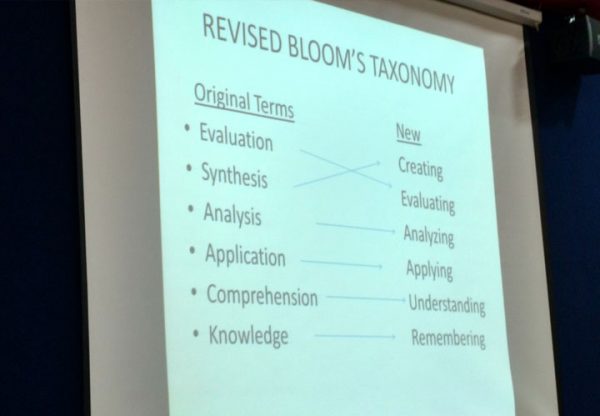
    Bloom’s Taxonomy is a set of three hierarchical models used to classify educational learning objectives into levels of complexity and specificity. The three lists cover the learning objectives in cognitive, affective and sensory domains. The cognitive domain list has been the primary focus of most traditional education and is frequently used to structure curriculum learning objectives, assessments and activities.

    Date
    Department
    11th August, 2018
    Automobile Engineering

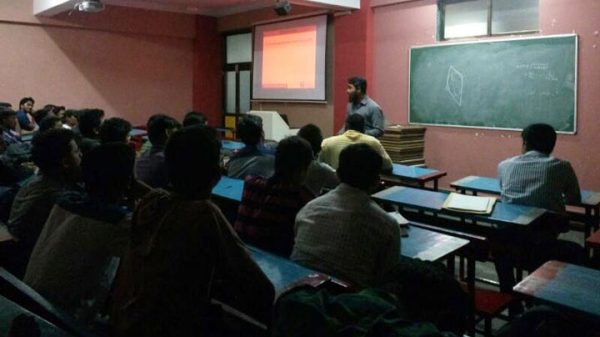
    One Day Training was conducted with four-hour rigorous training workshop for the teachers on Bloom’s Taxonomy and the different stages of thinking. 3 Guest speakers were invited to provide the training.

    Speaker defined the Taxonomy as an attempt to classify forms and levels of learning. Having explained the three domains of learning i.e. Cognitive, Affective and Psycho Motor Domain, she indulged the teachers in group learning and independent learning tasks wherein teachers followed the advanced organiser and flipped the classroom to identify effective teaching strategies.

    Several videos were also shown to the teachers to classify the questions asked in classrooms according to the Bloom’s Taxonomy. To make the workshop more interactive, several handouts were given to the teachers as they worked in groups to elaborate on the classification of questions according to different levels of thinking: Knowledge, Comprehension, Application, Analysis, Synthesis and Evaluation.

    It was an enriching experience as the teachers were appreciative of the usage of Bloom’s Taxonomy in classrooms.

    training-programme-on-blooms-taxonomy (1)
    training-programme-on-blooms-taxonomy (2)
  • Three Days Hands on Training on “MasterCam Software”

    Three Days Hands on Training on “MasterCam Software”

    Topics include in CAD/CAM systems (Hardware and Software), Geometric modeling using curves, surfaces and solids, CAD/CAM data exchange, CAD and CAM integration, Mechanical assembly, Mechanical Tolerancing, Mass property calculations, Process planning and Tool path generation, integration of CAD/CAM with the production machine and Computer control of machines and processes in manufacturing systems. Projects will focus on development of geometric procedures for design and manufacturing applications and the use of commercial CAD/CAM software for automating the production cycle. Applications include NC machining, design of (optimum) cutting tools and modeling and design of fixtures for dies and molds. Hands-on experience is attained through CNC machine tool laboratory.

    Date
    Department
    4th August, 2018
    Automobile Engineering

    A representative from CNC software inc. for MasterCam product was called to provide the training. Faculties teaching particular subject as well s interested faculities attended the training and got benefitted.

    training-on-MasterCam-software (1)
    training-on-MasterCam-software (2)
  • Project Based Learning Exhibition 2018 (Electrical Engg.)

    Project Based Learning Exhibition 2018 (Electrical Engg.)

    Project-Based Learning (PBL) is considered an alternative to the teacher led classroom model. In fact, this will integrate theory and practice. The benefits are plenty including improved writing skill, understanding concepts, people and processes in an organization. Major dividends include learning about people, organizational idiosyncrasies and skills to handle them when employed. The core idea of PBL is that real-world problems capture students’ interest and provoke serious thinking, as the students acquire and apply new knowledge in a problem-solving context.

    Date
    Department
    13th April, 2018
    Electrical Engineering

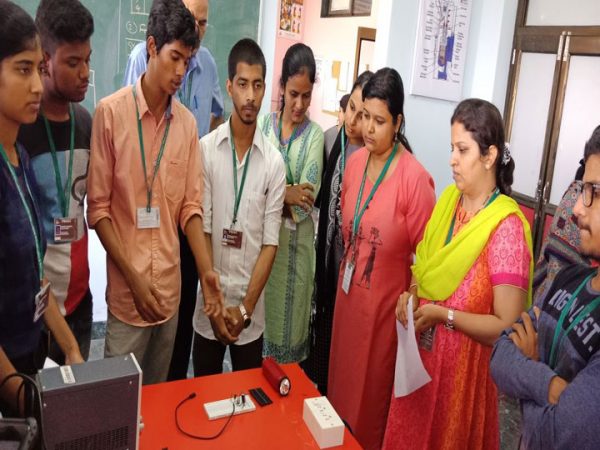
    Pillai HOC College of Engineering & Technology, Department of Electrical Engineering organized PBL on 13th April, 2018. In that event S.E., T.E. students displayed their projects. Various projects from different domain have been allocated to the students by their respective faculty. The necessary equipments and components provided by the college freely to the students to complete their projects. Evolution done by the pool of faculty team as per the given criteria’s :

    Criteria 1:

    1. Presentation of Concept Design
    2. Whether work evenly distributed among members?
    3. Level of Difficulty of design

    Criteria 2: Concept / Simulation / Theoretical Modelling

    Criteria 3: Comparison between Predicted (P) and Actual Measured (A)

    Criteria 4: Product / Build Quality

    Criteria 5: Novel Features and other Remark

    project-based-learning-2018 (1)
    project-based-learning-2018 (2)
    project-based-learning-2018 (3)
    project-based-learning-2018 (4)
    project-based-learning-2018 (5)
  • Project Based Learning Exhibition 2017-18 (EXTC Engg.)

    Project Based Learning Exhibition 2017-18 (EXTC Engg.)

    Department of Electronics and Telecommunication Engineering organized “Project Based Learning Competition” on 12th April, 2018 for students of second and third year. Total 109 students participated in this exhibition. Students got an opportunity to showcase their talent.

    Date
    Department
    12th April, 2018
    Electronics and Telecommunication Engineering
    project-based-learning-exhibition-2018 (1)
    project-based-learning-exhibition-2018 (2)
    project-based-learning-exhibition-2018 (3)
  • Project Based Learning Exhibition 2018 (Information Technology)

    Project Based Learning Exhibition 2018 (Information Technology)

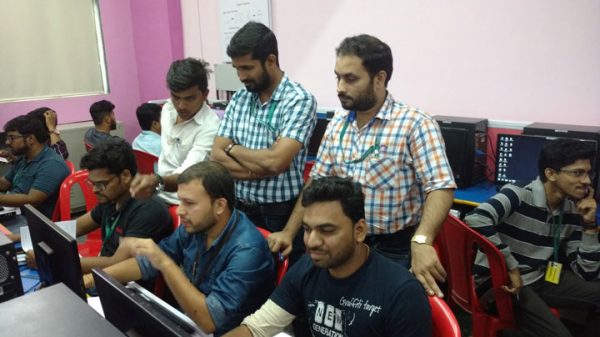
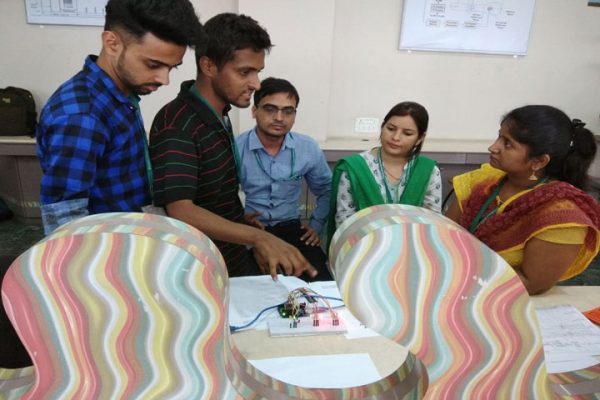
    Department of Information Technology organized a project competition for the students under Project Based Learning (PBL). Project Based Learning (PBL) prepares students for academic, personal and career success. This practice is unique to our institution and is implemented every semester for the students. The projects were given to second and third year students based on the subjects which are part of their academic curriculum. Few general domains relating to the course subjects were assigned to the students. Students were made to work in team of four members and each group was assigned a guide for assessing the projects. Topics like arduino based projects, android app development, web development etc. were given to students for PBL.

    Date
    Department
    12th April, 2018
    Information Technology Engineering

    Students work on their project over an extended period of time – from a week up to a semester – that engages them in solving a real-world problem or answering a complex question. They demonstrate their knowledge and skills by developing a public product or presentation. Through PBL students are able to understand the concepts of course subjects practically. As a result, students develop deep content knowledge as well as critical thinking, creativity and communication skills in the context of doing an authentic, meaningful project. This Project Based Learning leads to a better learning experience as opposed to text-book learning. Project Based Learning unleashes a contagious, creative energy among students and teachers. The overall concept behind this project based learning was very self-learning and helped the students to learn and sharpen their skills.

    The phases of the PBL event are as following:

    ScheduleEvents
    9:30 a.m. – 1:00 p.m. Students presented their work to other students and Faculty
    2:00 p.m. – 4:00 p.m. Evaluation by the external examiner

    Students gave and received constructive peer feedback that helped them to improve project processes and products. This common-sense acknowledgement of the importance of making student work and student products better is supported by research on the importance of “formative evaluation”, which not only means teachers giving feedback to students, but students evaluating the results of their learning. The overall concept behind this project based learning was very self-learning and helped the students to learn and sharpen their skills.

    project-based-learning-IT-2018 (1)
    project-based-learning-IT-2018 (2)
    project-based-learning-IT-2018 (3)
    project-based-learning-IT-2018 (4)
    project-based-learning-IT-2018 (5)
    project-based-learning-IT-2018 (6)
    project-based-learning-IT-2018 (7)
    project-based-learning-IT-2018 (8)
  • Project Based Learning Exhibition 2017-18 (AUTO Engg.)

    Project Based Learning Exhibition 2017-18 (AUTO Engg.)

    Project Based Learning started with the goal to help PHCET engineering students develop the skills, tools and character they will need as future leaders in the world of engineering practice.

    Date
    Department
    11th and 12th April, 2018
    Automobile Engineering

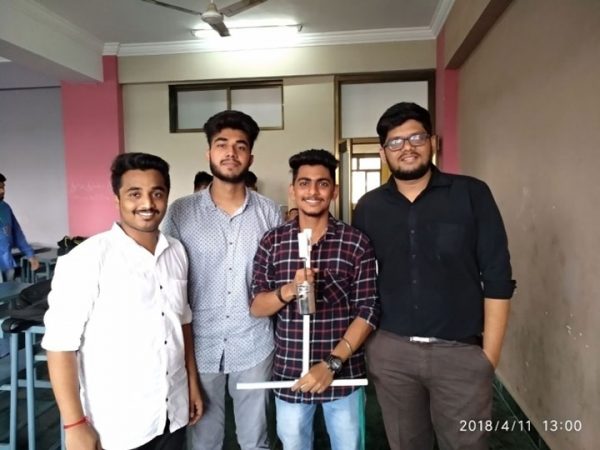
    Department of Automobile Engineering organised PBL on 11th April, 2018 for third year students and 12th April, 2018 for second year students. The necessary equipment and components provided by the college freely to the students to complete their projects. Evaluation was done by panel of faculties by standard rubrics.

    The problem statements for PBL are as follows:
    Second Year
    Topic: CATAPULT

    Design and Construct a Catapult, so that when the swing arm is pulled back to the desired angle and triggered / released, it propels a ball / mass forward. The triggering of the arm has to be done using electronic means. The ball / mass has to be considered from at least any two different classes of materials. The ball / mass is expected to land on a box or a bucket positioned at some arbitrary distance from it, in the very first bounce. The best design of catapult is the one that throws the ball in the box / bucket at various arbitrary positions, a maximum number of times out of the given 5 attempts.

    Related Subjects:
    Mechanics (projectile motion and dynamics), Kinematics (Theory of Machines-I), Mathematics, Computer Programming Concepts, Material Technology, Industrial Electronics, Production Process and Machine Shop Practice

    Third Year
    Topic: Aeolipile / The Hero Engine

    A hero engine or the Aeolipile is an ancient device that uses steam to produce rotational motion. Water is heated inside a chamber and the steam produced is released from a pair of nozzles. This produces a torque causing the device to rotate.

    Students will be asked to design in solid works, generate a mathematical model and finally build and test the device. The device should be able to rotate at a certain peak RPM, for a fixed amount of time and it needs to be attached to a generator to generate a voltage of at least 1V. The device will be developed in multiple stages.

    Related Subjects:
    Mechanics (Projectile Motion and Dynamics), Kinematics (Theory of Machines-I), Mathematics, Computer Programming Concepts, Material Technology, Industrial Electronics, Production Process and Machine Shop Practice, Thermodynamics, Heat Transfer

    project-based-learning-auto-2018 (1)
    project-based-learning-auto-2018 (2)
    project-based-learning-auto-2018 (3)
    project-based-learning-auto-2018 (4)
    project-based-learning-auto-2018 (5)
  • Business Plan Competition 2017-18

    Business Plan Competition 2017-18

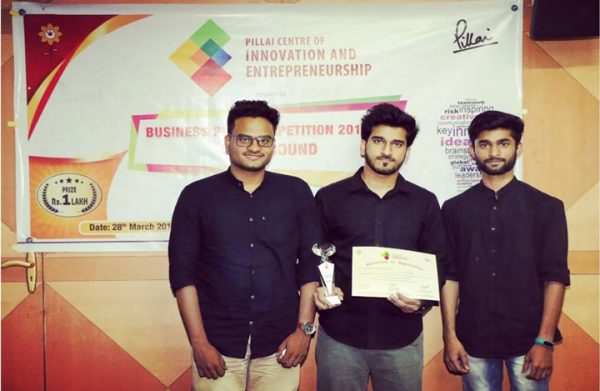
    Mahatma Education Society’s Pillai Centre of Innovation and Entrepreneurship conducted the final round of the 2017-18 Business Plan Competition on 28th March, 2018 at the Pillai Campus in Panvel, Navi Mumbai.

    Six teams from the Panvel and Rasayani Campuses competed for the grand prize of 1 Lakh Rupees. Industry experts were called in to judge the final round. In the end team “betmount.com” triumphed and won the grand prize.

    Betmount Team winners

    1. Chirag Oban TE (B) Department of Computer Engineering
    2. Pankaj Rane TE (B) Department of Computer Engineering
    business-plan-competition-2017-18 (1)
    business-plan-competition-2017-18 (2)
    business-plan-competition-2017-18 (3)
  • Seminar on “Piping Engineering”

    Seminar on “Piping Engineering”

    Title of Seminar Piping Engineering
    Theme Industry Oriented Seminar for Betterment of Student and To Create Interest in Application of Engineering Knowledge
    Schedule Date: 15th March, 2018
    Time: 1.40 – 4.15 p.m.
    Venue: Seminar Hall, 3rd Floor
    Target Audience T.E. Mechanical and Automobile Students
    Speaker Profile Name: Er. Mahesh Madhusudan Rajwade
    Designation: Assistant Professor in Mechanical Engineering – Don Bosco Institute of Technology
    Industry Experience: Industrial Experience of 2 years in piping and 3 years in Manufacturing
    Teaching Experience: Teaching piping in Mumbai university for Five year
    Abstract of Talk: Piping Engineering

    Within industry, piping is a system of pipes used to convey fluids (liquids and gases) from one location to another. The engineering discipline of piping design studies the efficient transport of fluid.

    Industrial process piping (and accompanying in-line components) can be manufactured from wood, fiberglass, glass, steel, aluminum, plastic, copper and concrete. The in-line components, known as fittings, valves and other devices, typically sense and control the pressure, flow rate and temperature of the transmitted fluid and usually are included in the field of piping design (or piping engineering). Piping systems are documented in piping and instrumentation diagrams (P&IDs). If necessary, pipes can be cleaned by the tube cleaning process.

    seminar-on-piping-engineering (1)
    seminar-on-piping-engineering (2)
    seminar-on-piping-engineering (3)

    Piping sometimes refers to piping design, the detailed specification of the physical piping layout within a process plant or commercial building. In earlier days, this was sometimes called drafting, technical drawing, engineering drawing and design but is today commonly performed by designers that have learned to use automated computer-aided drawing or computer-aided design (CAD) software.

    Plumbing is a piping system with which most people are familiar, as it constitutes the form of fluid transportation that is used to provide potable water and fuels to their homes and businesses. Plumbing pipes also remove waste in the form of sewage and allow venting of sewage gases to the outdoors. Fire sprinkler systems also use piping and may transport nonpotable or potable water, or other fire-suppression fluids.

    Piping also has many other industrial applications, which are crucial for moving raw and semi-processed fluids for refining into more useful products. Some of the more exotic materials used in pipe construction are Inconel, titanium, chrome-moly and various other steel alloys.

  • Workshop on “Building Quality Consciousness”

    Workshop on “Building Quality Consciousness”

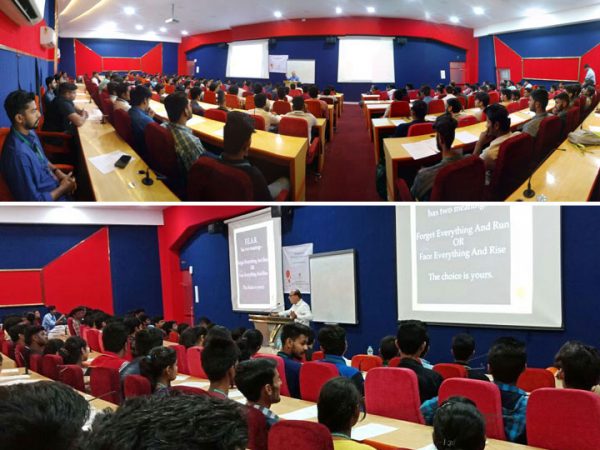
    In pursuit of its commitment to “Quality and Excellence”, PHCET has conducted a Seminar Series on “Building Quality Consciousness” on 6th, 7th, 8th and 15th March, 2018, working with and addressing students and faculty in year-wise and class-wise groups. Dr. Chelpa Lingam the Principal, Dr. Mathew T. J. and Prof. Mansi S. Subhedar planned and executed the seminar. In Sixteen sessions of ninety minutes each all students and faculty were addressed by Dr. Chelpa Lingam, the Principal evoked a renewed commitment to Quality. The importance of NBA and NAAC accreditation for all the stakeholders was explained. The students were briefedabout the outcome based education and delivery of teaching-learning process as per Blooms Taxonomy. The role of satisfaction survey and how to put the best foot forward at all times were also explained as given below.

    BE-session-1

    B.E. Session

    BE-session-2

    B.E. Session

    SE-session

    S.E. Session

    TE-session-1

    T.E. Session

    TE-session-2

    T.E. Session

    TE-session-3

    T.E. Session

    TE-session-4

    T.E. Session

    quality-consciousness-workshop-electrical-1

    Quality Consciousness Workshop Electrical Department

    quality-consciousness-workshop-electrical-2

    Quality Consciousness Workshop Electrical Department

    workshop-on-building-quality-consciousness (1)

    Workshop on “Building Quality Consciousness”

    workshop-on-building-quality-consciousness (2)

    Workshop on “Building Quality Consciousness”

    workshop-on-building-quality-consciousness (3)

    Workshop on “Building Quality Consciousness”

    workshop-on-building-quality-consciousness (4)

    Workshop on “Building Quality Consciousness”

    workshop-on-building-quality-consciousness (5)

    Workshop on “Building Quality Consciousness”

  • Seminar on “Advanced Thermodynamics”

    Seminar on “Advanced Thermodynamics”

    Title of Seminar Advanced Thermodynamics
    Theme To prepare students for exam as well as industry application of Thermodynamics
    Schedule Date: 8th February, 2018
    Time: 1.40 – 4.15 p.m.
    Venue: Seminar Hall, 3rd Floor
    Target Audience B.E. / T.E. Mechanical and Automobile Students
    Speaker Profile Name: Er. Awesh choudhary
    Education: Master’s in Mechanical Engineering
    Post graduate Diploma in piping and process equipment design
    Post graduate in product design and development
    Designation: Founder of CORT Consultancy
    Profile: CNC consultant at Cort Consutancy Entrepreneur and a career Counsellor
    Worked as Design Engineer at Indus Project Ltd. for 2 years
    Teaching Experience of 4 years

    Thermodynamics is a branch of physics concerned with heat and temperature and their relation to other forms of energy and work. The behavior of these quantities is governed by the four laws of thermodynamics, irrespective of the composition or specific properties of the material or system in question. The laws of thermodynamics are explained in terms of microscopic constituents by statistical mechanics. Thermodynamics applies to a wide variety of topics in science and engineering, especially physical chemistry, chemical engineering and mechanical engineering.

    seminar-on-advanced-thermodynamics (1)
    seminar-on-advanced-thermodynamics (2)
    seminar-on-advanced-thermodynamics (3)
    seminar-on-advanced-thermodynamics (4)
    seminar-on-advanced-thermodynamics (5)

    Historically, thermodynamics developed out of a desire to increase the efficiency of early steam engines, particularly through the work of French physicist Nicolas Léonard Sadi Carnot (1824) who believed that engine efficiency was the key that could help France win the Napoleonic Wars. Scottish physicist Lord Kelvin was the first to formulate a concise definition of thermodynamics in 1854 which stated, Thermo-dynamics is the subject of the relation of heat to forces acting between contiguous parts of bodies and the relation of heat to electrical agency.

    The initial application of thermodynamics to mechanical heat engines was extended early on to the study of chemical compounds and chemical reactions. Chemical thermodynamics studies the nature of the role of entropy in the process of chemical reactions and has provided the bulk of expansion and knowledge of the field. Other formulations of thermodynamics emerged in the following decades. Statistical thermodynamics, or statistical mechanics, concerned itself with statistical predictions of the collective motion of particles from their microscopic behavior. In 1909, Constantin Carathéodory presented a purely mathematical approach to the field in his axiomatic formulation of thermodynamics, a description often referred to as geometrical thermodynamics.

    Applied fields

    • Atmospheric thermodynamics
    • Biological thermodynamics
    • Black hole thermodynamics
    • Chemical thermodynamics
    • Classical thermodynamics
    • Equilibrium thermodynamics
    • Industrial ecology (re: Exergy)
    • Maximum entropy thermodynamics
    • Non-equilibrium thermodynamics
    • Philosophy of thermal and statistical physics
    • Psychometrics
    • Quantum thermodynamics
    • Statistical thermodynamics
    • Thermoeconomics
    • There are two types of thermodynamic instruments, the meter and the reservoir. A thermodynamic meter is any device which measures any parameter of a thermodynamic system. In some cases, the thermodynamic parameter is defined in terms of an idealized measuring instrument. For example, the zeroth law states that if two bodies are in thermal equilibrium with a third body, they are also in thermal equilibrium with each other. This principle, as noted by James Maxwell in 1872, asserts that it is possible to measure temperature. An idealized thermometer is a sample of an ideal gas at constant pressure. From the ideal gas law pV=nRT, the volume of such a sample can be used as an indicator of temperature; in this manner it defines temperature. Although pressure is defined mechanically, a pressure-measuring device, called a barometer may also be constructed from a sample of an ideal gas held at a constant temperature. A calorimeter is a device which is used to measure and define the internal energy of a system.
    • A thermodynamic reservoir is a system which is so large that its state parameters are not appreciably altered when it is brought into contact with the system of interest. When the reservoir is brought into contact with the system, the system is brought into equilibrium with the reservoir. For example, a pressure reservoir is a system at a particular pressure, which imposes that pressure upon the system to which it is mechanically connected. The Earth’s atmosphere is often used as a pressure reservoir. If ocean water is used to cool a power plant, the ocean is often a temperature reservoir in the analysis of the power plant cycle.