Category: News and Notifications

  • Seminar On Emerging Trends In Sensor Technology 2026

    Seminar On Emerging Trends In Sensor Technology 2026

    Date20 March 2026
    Venue3rd Floor Engineering Seminar Hall
    SpeakerMr. Mithun Nair
    Faculty CoordinatorMs. Nishigandha Bhopi, Ms. Pranali Sontakke
    DepartmentInformation Technology

    Event Objectives:

    • To provide knowledge about modern sensor technologies and their evolving role in various industries.
    • To introduce students to emerging trends such as IoT-enabled sensors, smart sensors, and wireless sensor networks.
    • To bridge the gap between theoretical concepts and practical applications of sensor systems.
    • To create awareness about real-world use cases of sensors in healthcare, automation, environmental monitoring, and smart cities.
    • To encourage innovation and research interest among students in the field of sensor technology.

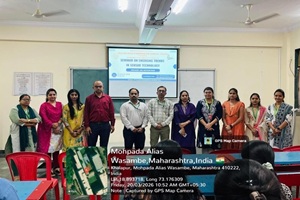
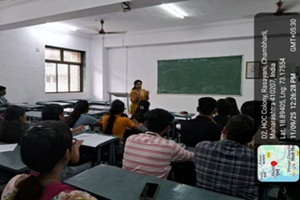
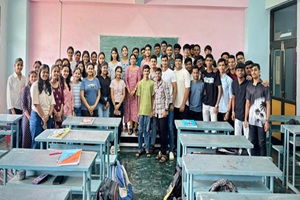
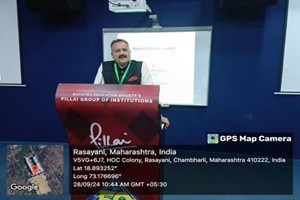
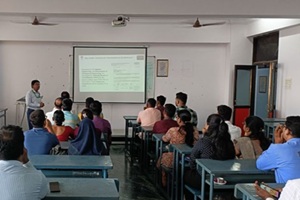
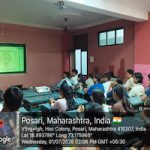
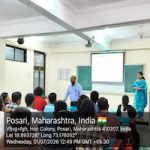
    The Department of Information Technology organized a Seminar Emerging Trends in Sensor Technology on 20 March 2026. The session began with a warm welcome address by the coordinators Ms. Nishigandha Bhopi and Ms. Pranali Sontakke, in the esteemed presence of the Mr. Rahul Kapse (Head of the Department), faculty members, and students of the IT Department.

    The seminar was conducted by Mr. Mithun Nair, who shared valuable insights into the latest advancements in sensor technologies and their applications in various domains such as IoT, automation, and smart systems. The speaker explained key concepts and emerging innovations, helping students understand the practical significance of sensor technology in today’s world.

    The session was highly informative and interactive, where students actively participated and gained knowledge about current industry trends. The seminar provided a platform for students to enhance their technical understanding and encouraged them to explore research and innovation in the field of sensor technology.

    Event Outcomes:

    • Students gained in-depth knowledge of emerging trends in sensor technology, including smart sensors, IoT-based systems, and real-time data applications.
    • The seminar provided exposure to industry insights shared by the expert speaker, helping students understand current technological advancements and career opportunities in this domain.
    • Students improved their analytical and technical thinking by learning how modern sensor systems are designed and integrated into practical applications.
    • The session encouraged students to explore research, innovation, and project development in the field of sensor technology and related areas.
    • Participants enhanced their interaction and learning skills through discussions, queries, and knowledge sharing during the seminar.
  • Fruits Distribution:”Spreading Smiles one Fruit At A Time”

    Fruits Distribution:”Spreading Smiles one Fruit At A Time”

    Date14th August , 2025
    VenuePrimary School, Parade, Mahopada
    Faculty CoordinatorDr. Vibhuti Awasthi & Prof. Abhijeet More
    DepartmentComputer Application
    Event ObjectiveTo raise awareness among primary school children about the benefits of healthy eating for better mental and physical development.
    Event OutcomeIncreased awareness among primary school children about the importance of healthy eating.
    Encouraged children to choose fruits and vegetables over fast food.
    Fostered a sense of social responsibility among MCA students.

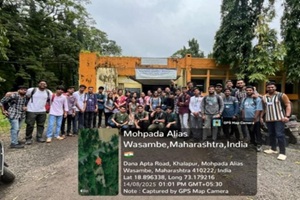
    The Department of Computer Applications successfully organized a social outreach program titled .This initiative aimed to educate young children about the importance of healthy food habits and their impact on mental and physical well-being.Under the guidance of Principal Dr. Jagdish W. Bakal and HOD Prof. Abhijeet More, the MCA students took an active role in engaging the children through interactive sessions and fun activities. The students not only distributed fresh fruits but also explained the benefits of a balanced diet in an age-appropriate and engaging manner. To make the session more impactful, the college students organized games and storytelling activities that emphasized the dangers of fast food and the advantages of nutritious eating. They highlighted how good nutrition contributes to better concentration, memory, and overall academic performance.

  • Seminar on DevOps

    Seminar on DevOps

    DateFebruary 27, 2025
    VenueC504 & C501
    Resource PersonProf. Tejas Vijay Joshi
    Faculty CoordinatorProf. Tejashree Patil
    DepartmentComputer Application
    Event ObjectiveTo provide students with practical knowledge of DevOps concepts like GitLab ,version control, CI/CD pipelines, and real-time implementation using Pipeline Editor
    Event OutcomeStudents gained hands-on experience in GitLab, created and configured CI/CD pipelines, and understood how automation improves software development and deployment processes.

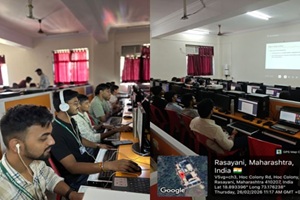
    On 27th February 2026, the Department of Computer Applications organized a Seminar on DevOps in Lab C504 and C501. The program commenced with an opening speech by the Head of the Department Mr,Abhijeet More. The session aimed to bridge the gap between theoretical learning and real-world industry practices by introducing students to modern DevOps tools and methodologies.The resource person, Prof. Tejas Vijay Joshi, delivered an insightful and practical session on DevOps fundamentals. Sir began by explaining the importance of DevOps in today’s software industry, emphasizing collaboration between development and operations teams, automation, Continuous Integration (CI), and Continuous Deployment (CD).

    The seminar included a practical demonstration using GitLab, where students learned repository management, CI/CD pipeline creation, branching strategies,Writing and configuring .gitlab-ci.yml files and the use of the Pipeline Editor. The session proved to be highly informative, practical, and beneficial for enhancing students’ industry readiness.

    Prof. Tejashree Patil extends sincere thanks to Prof. Tejas Vijay Joshi for guiding and advising our students. His session was informative, inspiring, and highly appreciated by all FYMCA students.

  • Cleaning Drive : Greenify Your Surroundings

    Cleaning Drive : Greenify Your Surroundings

    Date30th September , 2025
    VenueMohapada Village Community Area
    Faculty CoordinatorDr. Vibhuti Awasthi & Prof. Abhijeet More
    DepartmentComputer Application
    Event ObjectiveTo promote civic sense, environmental cleanliness, and social responsibility among students by conducting a cleanliness drive in nearby areas and the campus vicinity.
    Event OutcomeStudents developed a strong sense of hygiene, civic responsibility, and the importance of maintaining clean surroundings.
    They understood how individual and collective efforts contribute to community well-being and the nation’s growth.
    The activity enhanced teamwork, dedication, and a long-term commitment to social responsibility.

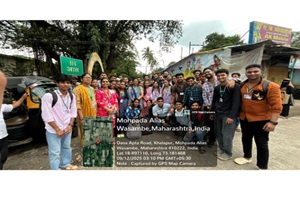
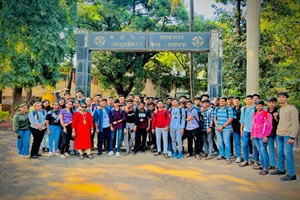
    The MCA Department organized a cleanliness drive in which students actively participated in cleaning the surroundings of Mahapoda village as well as the areas around the campus. The activity was conducted under the valuable guidance of Principal Dr. Jagdish W. Bakal and HOD Prof. Abhijeet More, whose motivating words inspired students to take greater responsibility for their environment. Our HOD Sir spoke about the importance of civic sense and how maintaining cleanliness contributes to the country’s overall growth and development. Both boys and girls showed remarkable enthusiasm, dedication, and teamwork, giving their best efforts throughout the drive. The initiative not only improved the cleanliness of the targeted areas but also strengthened the students’ commitment to contributing positively to society in the future.

  • Eco-Friendly Outreach Program: Say No to Plastic

    Eco-Friendly Outreach Program: Say No to Plastic

    DateSeptember 12th, 2025
    VenueMahapoda Village Market
    Faculty CoordinatorDr. Vibhuti Awasthi & Prof. Abhijeet More
    DepartmentComputer Application
    Event ObjectiveTo create awareness about plastic pollution and promote the use of eco-friendly paper bags.
    Event OutcomeIncreased public awareness of plastic pollution.
    Students developed social, communication, and environmental responsibility skills.

    The Department of Computer Applications organized a social outreach activity focused on environmental awareness through the use of paper bags. Prior to the event, students prepared handmade paper bags in the classroom and wrote impactful messages such as “Say No to Plastic” and “Save the Earth” on them. This initiative was encouraged by the Principal Dr. Jagdish W. Bakal and Head of Department Prof. Abhijeet More, who appreciated the students’ creativity and commitment.

    On March 12, 2025, students, guided by faculties , visited Mahapoda Village Market. They distributed paper bags to vegetable vendors, shopkeepers, and local people, explaining the harmful effects of plastic and encouraging the adoption of eco-friendly alternatives. Students distributed around 300+ paper bags, actively engaging with the community.Through this initiative, students learned about teamwork, community interaction, and the importance of sustainable practices. Their efforts not only helped reduce plastic use in the local market but also sparked positive discussions around environmental conservation.

  • Orientation Session on Placement

    Orientation Session on Placement

    DateSeptember 11, 2025
    VenueC506
    Resource Person Ms. Divya Nair
    HODProf. Abhijeet More
    DepartmentComputer Application
    Event ObjectiveTo introduce the placement process and explain the overall structure, rules, and timeline of campus recruitment.
    To familiarize students with placement policies including eligibility criteria, registration procedures, and code of conduct.
    To guide students on preparation strategies for aptitude tests, group discussions, technical interviews, and HR interviews.
    Event OutcomeStudents gained a deeper understanding of opportunities in Various Companies.

    On 11th September 2025, the Department of Computer Application at PHCET, in collaboration with SYMCA Students, organized an enriching session on placement opportunities in various companies.

    Prof. Abhijeet More, Head of the Department, delivered the welcome address, highlighting the importance of placement events and skill development among students. Held at the 5th floor C506 Hall, the session saw the enthusiastic participation of over 40 students. The guest speaker, Ms. Divya Nair madam provided students with career opportunities through campus recruitment.The session began with an introduction to top IT companies known for offering a number of jobs. Students were guided to readiness through various selection rounds. A major highlight of the event was the discussion on campus placement. Ms. Divya Nair madam shared introduction to the company, roles offered, and expectations, Screening based on logical reasoning and domain knowledge, Evaluation of communication and teamwork skills, Final selection based on technical expertise and personality fit. Additionally, the placement session drive was successfully conducted, providing valuable exposure and employment opportunities to students. The event was well-organized and received positive feedback from students. Ms. Divya Nair emphasized the importance of early planning and helped the Training & Placement Cell refine strategies for upcoming placement seasons.

    The placement drive was successfully conducted, fulfilling its objective of connecting students with reputable companies and providing them with valuable career opportunities. This report serves not only as a record of achievement but also as a foundation for improving future placement activities. With continued dedication and strategic planning, the institution aims to further enhance placement outcomes and strengthen industry-academia partnerships. The event witnessed enthusiastic participation from students across various disciplines where students raised questions on All queries were addressed thoroughly, leaving attendees with a clear and confident outlook.

    Mrs. Manjusha Jambhale extends heartfelt thanks to Ms. Divya Nair Madam for conducting this valuable session, which has inspired students to get opportunities in various companies.

  • Preoperative Course Of Science For FE Students

    Preoperative Course Of Science For FE Students

    Date1st August to 20th September
    VenueRoom No D 404, 405, Ist floor, PHCET
    Faculty CoordinatorDr. Manvendra Vashistha and Mr. Sathish U
    Resource PersonApplied Science Faculty Members
    DepartmentDepartment of Applied Sciences & Humanities
    Event ObjectiveAims to explain Basic Science in a simple and student-friendly manner to improve understanding and interest.

    Event Outcome: Basic understanding of PCM

    Basic Science forms the foundation for learning advanced scientific subjects. Many first-year students face difficulties due to weak fundamentals, lack of confidence, and fear of formulas and technical terms. This Bridge course aims to explain Basic Science in a simple and student-friendly manner to improve understanding and interest.

    The Basic Science Course provides a strong foundation for understanding fundamental scientific principles and for developing a scientific attitude among students. It introduces learners to the core branches of science such as physics, chemistry, and mathematics, helping them understand natural phenomena and the scientific explanations behind every day experiences. The course aims to foster curiosity, observation, logical reasoning, and critical thinking, while also strengthening problem-solving abilities.

    Contents:

    • Mathematics Foundation

    Review of algebra, indices, logarithms, and equations.
    Trigonometric identities and basic trigonometric equations.
    Coordinate geometry and straight lines.
    Basics of limits, continuity, and differentiation.
    Introduction to integration and its applications.
    Matrices and determinants (basic concepts).
    Basic probability and statistics.
    Problem-solving techniques for engineering mathematics.

    • Physics Fundamentals

    Units, dimensions, and vectors.
    Kinematics and laws of motion.
    Work, energy, and power.
    Properties of matter and elasticity.
    Basics of heat and thermodynamics.
    Waves and sound.
    Electricity and magnetism basics.
    Introduction to semiconductor devices and electronics.

    • Chemistry Basics for Engineering

    Atomic structure and periodic table review.
    Chemical bonding and molecular structure.
    States of matter and solutions.
    Thermodynamics in chemistry.
    Electrochemistry fundamentals.
    Basics of polymers and materials used in engineering.
    Corrosion and its prevention.
    Environmental chemistry.

    • Basic Engineering Concepts

    Introduction to engineering disciplines (Mechanical, Civil, Electrical, Computer, etc.)
    Basic engineering drawing concepts.
    Measurement systems and units in engineering.
    Introduction to problem-solving and design thinking.

    • Objectives of the Bridge Course

    Strengthen fundamental knowledge in science and mathematics.
    Prepare students for first-year engineering subjects.
    Improve analytical thinking and problem-solving skills.
    Introduce students to engineering concepts and tools.

  • Report On Industrial Visit To Common Effluent Treatment Plant, Patalganga

    Report On Industrial Visit To Common Effluent Treatment Plant, Patalganga

    Date19th November 2024
    VenueCommon Effluent Treatment Plant, Patalganga
    Faculty CoordinatorDr. Avinash Gatade, Dr. Sanjay Ghorpade, and Mrs. Sunita Khansole,
    Resource PersonPlant supervisor
    DepartmentDepartment of Applied Sciences & Humanities
    Event ObjectiveTo demonstrate various working of Common Effluent Treatment Plant.

    Event Outcome: ETP Plant Visit of Students

    • Enhanced Understanding: Students gained practical insights into the working of an Effluent Treatment Plant, complementing their theoretical knowledge of wastewater treatment processes.
    • Hands-on Exposure: They observed various stages of effluent treatment including screening, primary sedimentation, biological treatment, and sludge management, which helped in understanding real-world industrial applications.
    • Environmental Awareness: The visit emphasized the importance of pollution control, water recycling, and sustainable industrial practices, fostering a sense of environmental responsibility among students.
    • Technical Knowledge: Students learned about the operation of pumps, aerators, clarifiers, chemical dosing systems, and monitoring equipment used in ETPs.
    • Interactive Learning: Opportunity to interact with plant engineers and ask questions clarified doubts regarding process efficiency, regulatory standards, and challenges in effluent management.
    • Skill Development: Students improved observational and analytical skills by noting process parameters and operational methods used in industrial effluent treatment.
    • Inspiration for Future Careers: Exposure to the industrial setup motivated students to consider environmental engineering, process engineering, or related fields as potential career paths.

    Contents:
    What is Water Waste
    Water waste, or wastewater, is water that has been used and contaminated by human activities.
    Sources include households, industries, hospitals, agriculture, and commercial establishments.
    Contains pollutants like chemicals, detergents, pathogens, heavy metals, and organic matter.

    Sources of Water Waste
    Domestic / Household: Bathing, washing, kitchen effluents, sewage.
    Industrial: Manufacturing, textile, chemical, and food processing effluents.
    Agricultural Runoff: Pesticides, fertilizers, and animal waste entering water bodies.
    Hospitals & Laboratories: Contaminated water from labs, diagnostics, and pharmaceutical disposal.
    Commercial Establishments: Hotels, restaurants, malls, and offices producing greywater.

    Effects of Water Waste on the Environment
    Water Pollution: Contaminated water harms rivers, lakes, and groundwater.
    Soil Pollution: Pollutants affect soil fertility and quality.
    Health Hazards: Spread of waterborne diseases like cholera, typhoid, and dysentery.
    Ecosystem Damage: Aquatic life suffers due to toxins, oxygen depletion, and eutrophication.
    Economic Impact: Costs increase for water treatment and loss of usable water resources.

    Waste Management Rules, 2016 (India)
    Effluent Treatment: Industries must treat wastewater before discharge.
    Segregation: Domestic and industrial wastewater should not mix with stormwater.
    Reuse & Recycling: Promote reuse of treated water in agriculture, industry, or cooling.
    Compliance & Reporting: Regular monitoring, record-keeping, and reporting to authorities.
    Authorization: Only approved treatment plants can handle industrial wastewater.

    Roles and Responsibilities of Stakeholders

    • Industries / Producers:
      Treat effluents before discharge
      implement water recycling and zero-liquid discharge practices
      maintain records of wastewater treatment and disposal.
    • Households / Consumers:
      Avoid discharging chemicals, oils, or non-biodegradable waste into drains
      use water efficiently to reduce wastewater generation.
    • Wastewater Collectors / Treatment Plants:
      Ensure proper collection, treatment, and disposal of wastewater
      comply with environmental standards and maintain logs.
    • Government / Regulatory Bodies:
      Implement Water (Prevention and Control of Pollution) Act and related rules
      monitor compliance and enforce penalties for violations
      promote awareness campaigns for water conservation and proper wastewater disposal.
    • NGOs / Community Groups:
      Educate citizens about wastewater treatment and conservation
      promote rainwater harvesting, recycling, and eco-friendly practices.
  • Report on Parent Teachers Meeting (OSAY 2024-25)

    Report on Parent Teachers Meeting (OSAY 2024-25)

    Parents Teachers meeting for the odd semester of academic year 2024-25 was arranged on 28th of September, 2024 (Saturday) from 10.30 am to 11.30 am. Meeting started with the speech of Pricipal sir and then Mr. Raju Narwade, HoD (Civil) presided over the meeting and addressed the parents. After the common introduction, class wise meeting was conducted in which the class co-ordinators and faculty teaching the class interacted with the students and parents.

    The points discussed were:

    1. Concerns of parents.
    2. Internal Assessment marks and performance.
    3. Attendance of students in lectures.
    4. Facilities provided in our college.
    5. Training and Placement.
    6. Rules and regulations of the college that are helpful to the students.
  • Report on Parent Teachers Meeting (ESAY 2024-25)

    Report on Parent Teachers Meeting (ESAY 2024-25)

    Parents Teachers meeting for the even semester of academic year 2024-25 was arranged on 8th of March, 2025 (Saturday) from 10.30 am to 11.30 am. Meeting started with the speech of Pricipal sir and then Mr. Raju Narwade, HoD (Civil) presided over the meeting and addressed the parents. After the common introduction, class wise meeting was conducted in which the class co-ordinators and faculty teaching the class interacted with the students and parents.

    The points discussed were:

    1. Concerns of parents.
    2. Internal Assessment marks and performance.
    3. Attendance of students in lectures.
    4. Facilities provided in our college.
    5. Training and Placement.
    6. Rules and regulations of the college that are helpful to the students.