Category: News and Notifications

  • Industrial Visit to Orion Mall, Panvel

    Industrial Visit to Orion Mall, Panvel

    Total Number of Students10 Students
    Total Number of Faculty Members02
    CourseHeating, ventilation, and air conditioning
    Date of Visit30th March, 2024
    Industry VisitedOrion Mall, Panvel
    Address: Plot no: 311, Orion Mall, near ST Bus Depot, Forest Colony, Panvel, Navi Mumbai, Maharashtra 410206

    Department of Mechanical Engineering, Pillai HOC College of Engineering and Technology (PHCET), Rasayani arranged an industrial visit for students of third year mechanical engineering to:
    Orion Mall, Panvel
    Address: Plot no: 311, Orion Mall, near ST Bus Depot, Forest Colony, Panvel, Navi Mumbai, Maharashtra 410206

    On 30th March 2024. A group of 12 members (10 students and 02 faculty members) participated in this event.

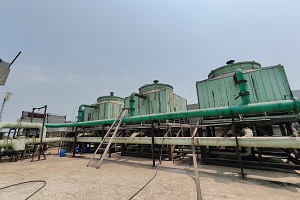
    Orion Mall, Panvel has a 4 Lakh sq.ft. carpet area and is spread over 3 floors. It uses water cooled packaged and ducted split air conditioners for major applications. The total cooling capacity is approximately 1100 Ton of Refrigeration.

    Industrial-Visit-to-Orion-Mall-Panvel (1)
    Industrial-Visit-to-Orion-Mall-Panvel (2)
    Industrial-Visit-to-Orion-Mall-Panvel (3)
    Industrial-Visit-to-Orion-Mall-Panvel (4)

    Air Conditioning System: 2 types of air conditioning systems are used

    1. water cooled packaged and ducted split air conditioners
    2. VRF system
    • Water cooled packaged and ducted split air conditioners

      In these packaged air conditions the condenser is cooled by the water. The condenser is of shell and tube type, with refrigerant flowing along the tube side and the cooling water flowing along the shell side. The water has to be supplied continuously in these systems to maintain functioning of the air conditioning system.

      The shell and tube type of condenser is compact in shape and it is enclosed in a single casing along with the compressor, expansion valve, and the air handling unit including the cooling coil or the evaporator. This whole packaged air conditioning unit externally looks like a box with the control panel located externally.

      In the packaged units with the water cooled condenser, the compressor is located at the bottom along with the condenser (refer the figure below). Above these components the evaporator or the cooling coil is located. The air handling unit consisting of the centrifugal blower and the air filter is located above the cooling coil. The centrifugal blower has the capacity to handle the large volume of air required for cooling a number of rooms. From the top of the package air conditioners the duct comes out that extends to the various rooms that are to be cooled.

    • VRF system

      VRF stands for variable refrigerant flow. VRF is a ductless, large-scale system for HVAC that performs at a high capacity. Unlike split AC equipment, VRF allows multiple indoor units to run on the same system, which is designed differently depending on the application.

      VRF systems obtain their high efficiency through the use of inverter compressors. Inverter systems allow the compressor to ramp up or down based on the needs within each space. A non-inverter system ramps up the compressor at full capacity all the time. Essentially it’s either on or off. With inverter systems operating at lower speeds and capacity, the efficiency gains can be substantial.

      This versatility means VRF products are customizable to meet the specifications of virtually any project, making them particularly appealing for commercial spaces and facility managers.

    List of Students Participated

    1. Mhatre Ketan Hirachand
    2. Gaikar Arya Sanjay
    3. Patil Ketan Harishchandra
    4. Mundhe Kushal Vishnu
    5. Harpude Girish Vilas
    6. Rushikesh Pawar
    7. Keshav Nirguda
    8. Gharat Prajyot
    9. Om Mashilkar
    10. Kadav Aditya
    List of Faculty Members Participated

    1. Mr. Manoj Jadhav
    2. Mr. Vivek Meshram
  • Hands on Workshop of “Robotics and IOT” with IOT Exhibition

    Hands on Workshop of “Robotics and IOT” with IOT Exhibition

    Date
    Venue
    Resource Person
    Faculty Coordinator
    Department
    29th and 30th March, 2024
    D414 Programming Lab
    Prof. Shubham Thakur
    Dr. Divya Chirayil
    Information Technology

    Event Objective

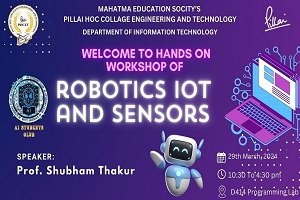
    To provide the students with hands-on experience and knowledge in IoT concepts, prototyping, connectivity, security, and real-world applications, fostering collaboration and inspiring innovation in the Industry.

    IOT Exhibition helped them to develop real time Projects after Hands- on Workshop .It offered students hands-on experience in applying theoretical knowledge to practical problems and also provided an opportunity for students to work on projects from conception to execution, gaining valuable skills in project management, problem- solving, and teamwork.

    Hands-on-Workshop-of-Robotics-and-IOT-with-IOT-Exhibition-2024 (2)
    Hands-on-Workshop-of-Robotics-and-IOT-with-IOT-Exhibition-2024 (3)
    Hands-on-Workshop-of-Robotics-and-IOT-with-IOT-Exhibition-2024 (4)
    Hands-on-Workshop-of-Robotics-and-IOT-with-IOT-Exhibition-2024 (5)

    Event Outcome

    • Enhanced Hardware and software Skills in IOT devices and interfacing with real time sensors.
    • To develop various Real Time Hardware Projects applicable to Industry Research and Development

    Contents

    • Introduction to Robotics ,IOT and Wireless Networks
    • Real Time IOT Project Implementation
    • Commonly used Sensors, Microcontrollers like Arduino and Rasberry Pie for Projects
    • Interfacing Sensors with Microcontrollers like Arduino and Raspberry Pie with Zigbee and Bluetooth Devices.
    • Real Time building various IOT and Robotics Projects
    • Exhibition and future Scope in Industry
    • Security and privacy considerations in IoT deployments.
    • Prototyping and development of IoT solutions using hardware and software tools.
    • Real-world IoT applications across various industries (e.g., smart cities, healthcare, agriculture).
    • Case studies and success stories in IoT innovation.
    • Future trends and advancements in the field of IoT.

  • Industrial Expert Lecture: Advanced in Thermal Power Plant & Its Needs

    Industrial Expert Lecture: Advanced in Thermal Power Plant & Its Needs

    Date29th March, 2024
    VenueTata Power, Trombay
    Resource PersonMr. Siddharth M. Tole (Training head TPSDI, Tata Power, Trombay, Ex. Unit Head Tata Thermal Power)
    Faculty CoordinatorMr. Atul V. Jade
    DepartmentMechanical Engineering
    Event ObjectiveTo reduce gap between curriculum and industry for the subject Turbo Machinery
    Event OutcomeStudents got knowledge of the actual installation and working of thermal power plant.
    Also got familiar with other sectors and requirements in the plant apart from the working they learnt in the theory classes.

    Thermal Power Plants run on Rankine cycle. But to run the plant mare the knowledge of power cycle is not sufficient. There is a need of control system, fuel and charge handling system, safety, sales etc. which is not covered under the single subject.

    Since the speaker is very knowledgeable and experienced in the field of power generation, he cleared all doubts asked by students very nicely. He explained about the existing cycles in power generation, its installation and other requirements. The overall session was very informative which satisfied students’ needs in the field.

    Industrial-Expert-Lecture-Advanced-in-Thermal-Power-Plant-&-Its-Needs (1)
    Industrial-Expert-Lecture-Advanced-in-Thermal-Power-Plant-&-Its-Needs (2)
  • Workshop on “Creating 3D Printing Ecosystem for Medical Applications: Opportunities & Challenges”

    Workshop on “Creating 3D Printing Ecosystem for Medical Applications: Opportunities & Challenges”

    Event Date29th March 2024
    DepartmentPillai Center for Innovation and Research, IIC and Mechanical Engineering
    TypeOffline Workshop
    ThemeTechnical Interaction
    OrganizersMr. Shashi Bhushan, Dr. R C Prasad
    SpeakersDr. Bhanupratap Gaur (External Expert), Dr. G V Patil, Dr. R C Prasad & Mr. Shashi Bhushan Sankhyan
    No. of Students Participated55
    No. of Faculty Participated8

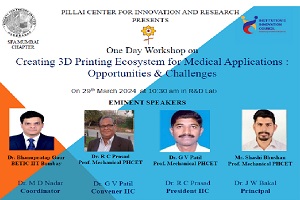
    The session began with an inaugural session for the event. Further session began with presentations on Introduction and overview to 3d printers, history and different methods delivered by Dr. G V Patil followed by Mr. Shashi Bhushan and then Dr. R C Prasad.

    Workshop-on-Creating-3D-Printing-Ecosystem-for-Medical-Applications-Opportunities-&-Challenges (1)
    Workshop-on-Creating-3D-Printing-Ecosystem-for-Medical-Applications-Opportunities-&-Challenges (2)
    Workshop-on-Creating-3D-Printing-Ecosystem-for-Medical-Applications-Opportunities-&-Challenges (3)
    Workshop-on-Creating-3D-Printing-Ecosystem-for-Medical-Applications-Opportunities-&-Challenges (4)
    Workshop-on-Creating-3D-Printing-Ecosystem-for-Medical-Applications-Opportunities-&-Challenges (5)

    Later the external expert Dr. Bhanupratap Gaur addressed and presented his work on Medical instruments and implementation of additive manufacturing for the same. After the presentation participants were given hands on practical on Ultimaker 2+ Extended (3D Printer). After a break, students were taught about Computer Aided Design software with hands on practical on Solidworks (CAD Software).

  • Industrial Visit at “IDEMI (Institute for Design of Electrical Measuring Instruments)”

    Industrial Visit at “IDEMI (Institute for Design of Electrical Measuring Instruments)”

    Date28th March, 2024
    Industry NameInstitute for Design of Electrical Measuring Instruments
    Location/VenueSwatantyaveer Tatya Tope Marg, Eastern Exp Highway, Sion, Chunabhatti Mumbai – 400022
    Faculty CoordinatorMr. Vaibhav Bhagat – Assistant Professor, Dept. of Mechanical Engineering
    Industry Person/Coordinator
    1. M.S. Kamat – Asst. Director
      Tool Design & CAD/CAM Department, IDEMI

    2. Mr. Sagar Nevage, Design dept.

    DepartmentMechanical Engineering
    Event ObjectiveSE (Semester IV) Students of Mechanical Department
    No. of Students Participated25
    No. of Faculty Participated01

    Introduction:

    Department of Mechanical Engineering, Pillai HOC College of Engineering and Technology arranged one day Industrial Visit for 4th Semester Degree Students to “Institute for Design of Electrical Measuring Instruments”, Mumbai dated 28th March, 2024 for technical knowledge enhancement and practical exposure to students.

    Objective of the visit:

    It’s mentioned in the syllabus of Skill based Lab: CNC and 3-D printing, it’s necessary to give practical exposure to the Students of Semester IV regarding CNC machines and 3D printing. The objective of this industrial visit is to bridge the widening gap between theoretical learning and practical exposure by giving students first-hand exposure to different machines. This experience can help students to get information regarding the functioning of various industries and associated problems.

    Company Profile:

    IDEMI is an Organization established by the Government Of India Society in the year 1969 as a service to Instrument Industry Organization. The main objective of setting up this Institute was to gear up the growth potential of indigenous instrument industry and hence to meet the ever growing instrumentation needs of the country by augmenting productivity quality control in the industrial sector – be it in Electrical, Electronics or Process Control Instruments. The Institute is looked upon as a nodal Centre in view of its multifarious activities offered to suit various needs of the instrument industry.

    Content:

    On 28th March, 2024 students reached IDEMI (Mumbai) by 11.00 a.m.. After entering the institute, Industry Coordinators first took us to the Presentation room where they gave short information on what we will be learning today and gave safety instructions. Then, they divided students in 3 groups having 8 to 10 students and allotted a separate coordinator for each group.

    Introduction and Presentation

    Total of 5 sections shown in the visit:

    • Designing Lab: In this lab, students saw how the designing process is done on different software’s, and then showed some prototypes of air gun, paint spray and oil casing. Showed how a model of face is made by scanning a real person’s face.

      Software used: SolidWorks, Catia, etc.

    • SLS & SLA Lab: In this lab, the SLS (Selective laser sintering) and SLA (Stereolithography) printers have been shown, also shown some prototypes made on those machines.
      Material used: thermoplastics, powdered metal, resins, etc. Machine internal temperature: 15 C (-170 C)
      Software used: Materialise Magics
    • EDM (Electrical Discharge Machining) Section: It is divided in two parts;
      1. Wire EDM Machine:
        Machine used: ONA AF35 WIRE EDM MACHINE Wire type: Hard Brass wire, Zinc coated brass wire
        Wire diameter: 0.25 mm
        Demineralized water used throughout the job.
      2. Spark EDM Machine:
        EDM oil is used.
        Machining is done with help of sparks. It is used for blind jobs.

    • CNC Milling: In this lab, Different CNCs and milling machines shown
      Machine available –
      3 axes
      4 axes
      5 axes

      3 Axis Vertical Milling Machine

      4 Axis horizontal Milling Machine

      5 Axis Milling Machine
    • NABL Dimension Calibration Lab: In this lab, calibration and inspection is done on different machines.
      1. Micro hite – 350
      2. Torque Wrench calibration system
      3. Universal measuring machine – 2D CMM
      4. Coordinate measuring machine – 2D CMM

      Universal measuring machine (2D UMM)

      Coordinate measuring machine (3D CMM)

      Micro hite 350 (Digital Height Gauge)

    Group Photo

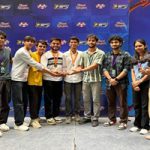
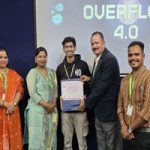
  • Seminar for “HackOverflow 2.0” by AECC Global

    Date28th March, 2024
    VenueConclave
    Resource PersonMr. Abhishek Gupta
    Faculty CoordinatorProf. Abhijeet More & Prof. Srijita Bhattacharjee
    DepartmentComputer Engineering
    Event ObjectiveProvide valuable insights and guidance for students interested in international education.
    Event OutcomeKeynote presentations delivered by speakers covered selecting institutions, courses, scholarships, and visa procedures.

    AECC Global sponsored and conducted a seminar for HackOverflow 2.0. Interactive Q&A sessions provided personalized guidance. Networking opportunities allowed students to connect with experts and peers.

    Services provided by AECC Global include expert guidance in selecting the right institution and course tailored to individual career prospects and interests. They also manage the entire application process, including securing offer letters from desired institutions and assisting in scholarship applications to alleviate education costs.

    Students gained knowledge and established connections to support their aspirations of studying abroad. AECC Global remains committed to facilitating students’ educational endeavors.

  • Workshop on “UML Designing” 2024

    Workshop on “UML Designing” 2024

    Date26th March, 2024
    VenueLab C404
    Resource PersonProf. Abhijeet More
    Faculty CoordinatorDr. Rajashree Gadhave
    DepartmentComputer Engineering
    Event ObjectiveThe objective of this workshop is encouraging students to draw various UML diagrams of their project
    Event OutcomeStudent should plan, schedule and track the progress of the project. Students should identify and analyze the problem statement of their project and able to design diagram.

    Department of computer Engineering organized a workshop on UML Designing on March 26, 2024. Total 50 students and staff attended the program. This hands-on workshop conducted by our faculty member Prof. Abhijeet More. He has given the knowledge about how to design the UML for projects. This workshop conducted in B404 lab.

    Workshop-on-UML-Designing-2024 (1)
    Workshop-on-UML-Designing-2024 (4)
    Workshop-on-UML-Designing-2024 (3)
    Workshop-on-UML-Designing-2024 (2)

    Contents:

    • All UML diagrams
    • DFD diagrams
    • Deployment of all UML diagrams
  • Workshop on “LaTex” 2024

    Workshop on “LaTex” 2024

    Date26th March, 2024
    VenueLab C404
    Resource PersonProf. Rohini Bhosale
    Faculty CoordinatorDr. Rajashree Gadhave
    DepartmentComputer Engineering
    Event ObjectiveThe objective of this workshop is encouraging students to write papers and report with ease by using latest technology.
    Event OutcomeStudent should learn new tool of formatting as LaTeX provides a very powerful, yet easy-to-learn way of formatting documents. It offers a consistent and uniform layout. Students will be able to learn Typeset a mathematical document using LaTex. Students will be able to learn about graphics in LaTex.

    Department of computer Engineering organized a workshop on LaTex Designing on March 26, 2024. Total 50 students and staff attended the program. This hands-on workshop conducted by Head of Department Prof. Rohini Bhosale madam. The main objective behind conducting this workshop is to encourage students to write papers and report and so this software helps students to write a paper with less effort. This workshop conducted in C404 lab.

    Workshop-on-LaTex-2024 (1)
    Workshop-on-LaTex-2024 (2)
    Workshop-on-LaTex-2024 (3)
    Workshop-on-LaTex-2024 (4)

    Contents:

    • Document basic structure
    • Basic commands
    • Equations
    • Figures
    • Cross references
    • Creating Latex Bibliography files
  • Workshop on “Kickstart with DSA and Development”

    Workshop on “Kickstart with DSA and Development”

    Date26 March, 2024
    VenueClassroom B-505
    Resource PersonMs. Prachi Sorte, Assistant Professor, IT Department.
    Mr. Rahul Reddy, Student , BE IT
    Faculty CoordinatorMs. Prachi Sorte
    DepartmentInformation Technology

    Event Objective

    • Introduction to DSA
    • Fundamentals of Data Structures
    • Complex Data Structures
    • Algorithm Basics
    • Sorting and Searching Algorithms
    • Problem-Solving Strategies

    Event Outcome

    • Enhanced Understanding of DSA Concepts
    • Practical Coding Skills
    • Algorithmic Thinking and Problem-Solving
    • Preparation for Technical Interviews
    • Continuous Learning and Improvement
    ACE-Workshop-on-How-to-Become-a-DEV (1)
    ACE-Workshop-on-How-to-Become-a-DEV (2)
    ACE-Workshop-on-How-to-Become-a-DEV (3)
    ACE-Workshop-on-How-to-Become-a-DEV (4)
    ACE-Workshop-on-How-to-Become-a-DEV (5)

    Contents:

    The event, led by Rahul Reddy from BEIT, commenced with a comprehensive introduction to Data Structure, delving into its key features and highlighting its significance in programming. With a focus on practical application, Reddy explained the fundamentals of DSA, highlighting their role in organizing and managing data efficiently. He also apprised us about the basics of programs. Concepts such as time complexity, space complexity, and Big O notation were elucidated to provide participants with a theoretical foundation. All the students answered the questions promptly which made the workshop interactive and congenial.

    This interactive approach not only enhanced their understanding of DSA but also immersed them into the convoluted world of programming excellence. As the session progressed, students eagerly posed their inquiries, expressing their curiosity and eagerness to grasp the intricacies of DSA and development. The speaker adeptly addressed each query, fostering an environment of open dialogue and shared learning. Through this collaborative exchange, students gained deeper insights into the framework, clarifying any uncertainties that may have hindered their comprehension. The workshop facilitated a comprehensive understanding of DSA, empowering students to navigate through potential challenges with confidence and proficiency.

  • Expert Lecture on “Flip Flops at PHCET”

    Expert Lecture on “Flip Flops at PHCET”

    Date
    Venue
    Organized by
    Faculty Coordinator
    Speaker
    Department
    26th March, 2024
    Smart Classroom
    ACE Club, PHCET
    Ms. Kajal Patel
    Ms. Supriya Shigwan
    Information Technology

    Event Objective:

    • Deepen students’ knowledge in digital electronics.
    • Develop practical skills in designing sequential logic circuits.
    • Highlight the industry relevance of flip flops.
    • Facilitate networking and collaboration among students and experts.
    • Promote the activities of the ACE Club at PHCET, fostering a sense of community and academic excellence within the institution.
    Expert-Lecture-on-Flip-Flops-at-PHCET (1)
    Expert-Lecture-on-Flip-Flops-at-PHCET (2)
    Expert-Lecture-on-Flip-Flops-at-PHCET (3)
    Expert-Lecture-on-Flip-Flops-at-PHCET (4)
    Expert-Lecture-on-Flip-Flops-at-PHCET (5)
    Expert-Lecture-on-Flip-Flops-at-PHCET (6)
    Expert-Lecture-on-Flip-Flops-at-PHCET (7)

    Contents:
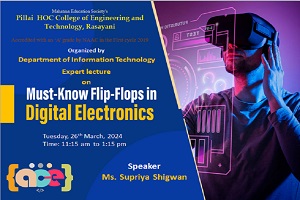
    To understand the fundamental component in digital electronics and enhance their understanding of this crucial aspect of hardware electronic circuits. Various types of flip flops, including RS, D, JK, and T flip flops, highlighting their unique characteristics and operational principles. Through illustrative examples and interactive discussions, the functionalities of each type, enabling students to grasp the concepts effectively.

    Applications of various flip flops in diverse fields such as digital communication, computing, and control systems. The Seminar was emphasized the relevance of understanding flip flops in the context of modern technological advancements, underscoring their indispensable role in the design and implementation of digital systems.

    Overall, the expert lecture on flip flops proved to be a resounding success, fostering a deeper understanding of digital electronics among the students and inspiring them to delve further into the realm of sequential logic circuits. Such initiatives serve as a testament to PHCET’s commitment to nurturing academic excellence and fostering a culture of learning and innovation among its students.