Category: News and Notifications

  • Site Visit to “J. Kumar Infraprojects Ltd – CIDCO Coastal” 2025

    Site Visit to “J. Kumar Infraprojects Ltd – CIDCO Coastal” 2025


    Date
    Venue
    Resource Person
    Faculty Coordinator
    Department

    10 October 2025
    Targhar – CIDCO Coastal Road PKG-1 Site
    Mr. Santosh Bobde
    Dr. Shilpa Pankaj Kewate
    Civil Engineering

    Event Objective :

    The objective of the site visit was to provide students with practical exposure to on-site construction activities, segment casting procedures, site management practices, and safety protocols followed in large-scale infrastructure projects.

    Event Outcome :

    Students gained hands-on understanding of segment casting operations, reinforcement and shuttering processes, post-tensioning techniques, and site execution management. They also learned about real-time safety measures essential for working on major infrastructure projects.

    Description of Event:

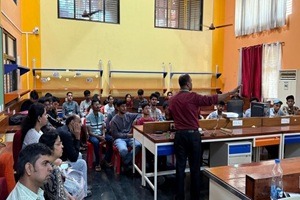
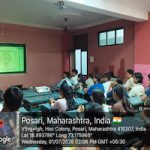
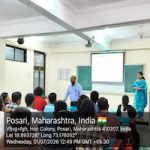
    A site visit for the B.E. (Semester VII) Civil Engineering students was organized by the Department of Civil Engineering on 4th October 2024 at J. Kumar Infraprojects Ltd., CIDCO Coastal Road Package-1 (Targhar).

    The visit aimed to help students understand the execution of large-scale coastal road construction works and the coordination involved between contractors, consultants, and site staff.

    Upon arrival, the Site Safety In-charge conducted a detailed safety briefing for all students, emphasizing the importance of personal protective equipment (PPE), safe movement on site, and emergency protocols.

    Following the safety session, students were guided to various work locations on the site. The site engineers and the consultant team explained:

    • Segment Casting Procedures
    • Reinforcement Detailing
    • Shuttering and Formwork Arrangements
    • Casting Methods and Quality Control
    • Hydraulic Jacking in Post-Tensioning
    • Site Handling, Planning, and Execution Methods
    • Overall Site Management and Coordination

    Students observed ongoing construction activities and interacted with the engineering team, which enriched their understanding of bridge/road segment construction processes.

    The visit provided valuable practical insights, complementing their academic learning and enhancing their industry readiness.

  • Hands-on Workshop on Arduino 2025-26

    Hands-on Workshop on Arduino 2025-26

    DateOctober 10, 2025
    VenueResearch lab
    Resource PersonMr. Upendra Patil
    Faculty CoordinatorProf. Supriya Shigwan
    DepartmentElectrical and Computer Engineering
    Event ObjectiveTo provide the fundamental knowledge of Arduino Processor with hands on practice.
    Event OutcomeParticipants gained a fundamental understanding of how the Arduino platform works, including its hardware and software components.

    Speaker started the session with the introduction of Arduino. He explains the types of Arduinos available in the market and how students can reform them into a commercial product. He has also shown them the working model using Arduino. Around 46 third year ECE students attended the workshop.

    The Workshop content is as follows:

    Arduino is an open-source platform used for building electronics projects. Arduino consists of both a physical programmable circuit board or microcontroller and a software, IDE (Integrated Development Environment) that runs on the computer. It is used to write and upload computer code to the physical board.

    • Familiarization of Arduino IDE.
    • LED blinking with different ON/OFF delay timings with a. inbuilt LED b. Externally interfaced LED
    • Arduino based voltage measurement of 12V solar PV module/ 12V battery and displaying the measured value using the I2C LCD.
    • Arduino based DC measurement using Hall-effect current sensor like LEM LA55P sensor and displaying the value using I2C LCD module.
    • DC motor speed control using MOSFET driven by PWM signal from Arduino module. Program on Arduino to upload temperature and humidity data to thingspeak cloud. Program on Arduino to retrieve temperature and humidity data from the thingspeak cloud.

    By conducting the workshop, students understand what an Arduino is and how it works. Program Arduino using code written in Arduino IDE. Use different sensors , components and prototype modules using a breadboard. And learn to build innovative project with Arduino.At the end of the session Some prominent questions were asked by the students regarding the interfacing of arduino that was promptly answered by the speaker.

  • Report on TechFusion Expo 2025

    Report on TechFusion Expo 2025

    DateOctober 07, 2025
    Venue3rd Floor Architecture Hall
    Resource PersonMr. Omkar Gharat – Research Lead, Startologic Technologies
    Faculty CoordinatorMs. Shibani Bose
    DepartmentInformation Technology
    Event Objective:To showcase students’ innovative technical ideas and project implementations through mini project exhibitions.
    To encourage creativity, collaboration, and critical thinking through interactive technical, infographic, and design events.
    To enhance students’ confidence, communication, and presentation skills through exposure to expert judges and audience interactions.
    To promote teamwork and social engagement through the setup of food and game stalls, encouraging entrepreneurship and event management skills.
    Event Outcome:Students effectively demonstrated technical proficiency and creativity through project and design presentations.
    The food and game stalls fostered a spirit of entrepreneurship, teamwork, and community engagement among students.
    Students received valuable insights from experts and judges, motivating them to pursue innovative ideas.
    The Infographic Making competition enhanced students’ visual communication skills, creativity, and ability to present information in a clear and impactful manner.
    he program created a sense of unity and enthusiasm across the department, reinforcing the importance of both professional and personal growth.

    The Department of Information Technology successfully organized the TechFusion Expo 2025 – Student Development Program (SDP), a one-day event aimed at fostering innovation, creativity, and holistic student growth. The program began at 11:45 AM with a Welcome and Inauguration Ceremony featuring Lamp Lighting, Banner Reveal, and Ganesh Vandana, followed by addresses from dignitaries including Dr. Jagdish W. Bakal, Dr. Srijita Bhattacharjee, and Ms. Shibani Bose. A keynote session by Mr. Omkar Gharat further motivated students to pursue technology-driven creativity.

    Post-inauguration, students actively participated in events such as the Mini Project Showdown, Coders Quiz, and Infographic Design Competition, showcasing their technical skills and teamwork. Food and Game Stalls at the Main Stage Area added a festive touch, promoting entrepreneurship and community engagement.

    The event concluded with a Prize Distribution Ceremony recognizing exceptional talent, followed by a Vote of Thanks, marking the end of a successful day of learning, innovation, and enjoyment.

  • Traffic Volume Study Report

    Traffic Volume Study Report

    DateOctober 07, 2025
    VenuePillai Hoc College of Engineering and Technology, Rasayani Entrance Junction.
    Faculty CoordinatorMs. Gayatri Pathak
    DepartmentCivil Engineering
    Event Objective:To observe and record the movement of different types of vehicles at the selected junction.
    To understand how traffic volume varies during a specific time period using manual counting methods.
    To convert vehicle counts into PCU values and study their impact on overall traffic flow.
    Event Outcome:Students learn how to collect and classify traffic data accurately in real field conditions.
    Students understand traffic behavior, peak flow patterns, and the effect of mixed traffic on road performance.
    Students gain experience in analyzing collected data, calculating PCUs, and preparing a basic traffic study report.

    A Traffic Volume Study was conducted on 07 October 2025 at the Pillai HOC College Entrance Junction for TE students as a part of the Transportation Engineering I curriculum prescribed by Mumbai University. The study aimed to observe, record, and analyze the flow of different categories of vehicles using the manual counting method over a fixed time interval. Students collected classified traffic data for trucks, buses, cars, two-wheelers, three-wheelers, and cycles, and later converted these counts into Passenger Car Units (PCU) to assess the relative impact of each vehicle type on traffic flow. This analysis helped in identifying traffic density, peak movement patterns, and the influence of mixed traffic on roadway performance. The activity provided students with hands-on experience in field data collection, tally sheet preparation, and traffic evaluation techniques, thereby strengthening their understanding of real-world traffic operations.

  • Axiom Report

    Axiom Report

    DateOctober 6, 2025
    VenueECS Department, 1st Floor
    Faculty CoordinatorMr. Shashikant Renushe
    DepartmentElectronics and Computer Science
    Event Objective:To provide a platform for students to showcase their technical skills through paper presentations, mini-projects, and digital creativity.
    To promote technical communication, innovation, and hands-on learning among SE, TE, and BE students.
    To encourage peer learning, interdisciplinary thinking, and exposure to current technological trends.
    To develop confidence in presenting ideas and improve students’ analytical and design capabilities.
    Event Outcome:Students demonstrated strong technical competence through well-researched paper presentations, functional prototypes, and digitally designed posters.
    Participants gained experience in articulating ideas, defending concepts, and presenting solutions effectively.
    The event fostered teamwork, creativity, and confidence in public speaking and technical demonstration.
    Faculty judges provided expert feedback, helping students refine their technical understanding and project execution.
    The event strengthened departmental student engagement and nurtured a competitive yet collaborative environment.

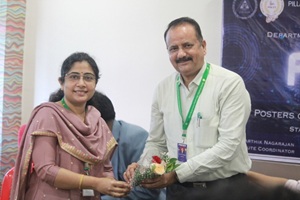
    The Student Council of the Department of Electronics and Computer Science organized AXIOM, a departmental-level student event, on 6 October. The program included three major competitions: Technical Paper Presentation (TPP), Mini Project Competition, and Digital Poster Making using online tools. The event commenced with an inaugural ceremony graced by Principal Dr. Jagdish Bakal, who addressed the gathering and encouraged students to actively participate in technical activities that enhance their academic and professional growth.

    Dr. Mansi Subhedar, Head of Department, delivered the welcome address, highlighting the importance of technical events in developing innovation-driven skills among engineering students. Dr. Karthik Nagarajan was invited as a distinguished guest for the program and interacted with the participants during the event.

    The Technical Paper Presentation was evaluated by Dr. Shilpa Kewate, who assessed students on technical depth, novelty, clarity of presentation, and overall content delivery. The Mini Project Competition was judged by Ms. Ekta Ukey, who reviewed the working prototypes, design approach, problem-solving ability, and innovation demonstrated by the students. The Digital Poster Making competition showcased students’ creativity using various online design tools, where participants presented concepts in a visually appealing and technically accurate manner.

    The event witnessed enthusiastic participation from students across the department. Each competition provided a platform for students to share ideas, build confidence, and engage in meaningful discussions with faculty and peers. The judges appreciated the quality of work displayed and encouraged students to continue exploring technical challenges through projects and research activities.
    Overall, AXIOM 2025 was a successful and impactful event that strengthened the spirit of innovation, teamwork, and technical excellence within the department.

  • IoE Software Innovation Competition 2025

    IoE Software Innovation Competition 2025

    DateOctober 04, 2025
    VenueRooms D404 and D405
    Resource PersonMr. Upendra Patil, Mr. Mithun Nair, and Ms. Sangeeta Menon
    Faculty CoordinatorMs. Trapti Soni and Ms. Nishigandha Bhopi
    DepartmentInformation Technology
    Event Objective:Encourage innovative IoT-based solutions for real-world problems.
    Showcase students’ creativity, problem-solving, and technical skills.
    Enhance practical knowledge of IoT and new technologies.
    Promote teamwork, research, and innovation in software development.
    Event Outcome:Showcased innovative IoT-based software projects from Information Technology students, highlighting creativity and technical proficiency.
    Participants demonstrated effective problem-solving and practical knowledge of IoT and emerging technologies.
    Teams practiced end-to-end solution development, including ideation, design, execution, and presentation.
    Judges provided expert feedback focusing on innovation, execution, and communication, enriching participants’ learning experience.
    Cash prizes and certificates recognized outstanding projects, motivating further exploration, research, and certification in IoT and related fields.
    Faculty coordinators and resource persons received positive outcomes in organizing a structured, informative, and engaging competition.
    The event improved participants’ confidence in presenting technical concepts to a professional audience and willingness to pursue advanced opportunities in IoT.

    The IoE Software Innovation Competition 2025 was organized by the ISTE Student Chapter – Department of Information Technology on 4 th October 2025 in Rooms D404 and D405. The event aimed to encourage students to showcase innovative IoT-based software projects and enhance their creativity and technical knowledge. The competition was judged by Mr. Upendra Patil, Mr. Mithun Nair, and Ms. Sangeeta Menon, who evaluated participants based on innovation, execution, and presentation. Under the guidance of Ms. Trapti Soni and Ms. Nishigandha Bhopi, the event concluded successfully, with students gaining valuable learning experiences, expert feedback, and recognition through cash prizes and certificates.

  • Navratri Celebration 2025

    Navratri Celebration 2025

    DateSeptember 30th, 2025
    VenueD202 Classroom
    Faculty CoordinatorDr. Rajashree Gadhave, Ms. Snehal Chitale
    DepartmentComputer Engineering
    Event ObjectiveThe objective of this event was to celebrate the cultural spirit of Navratri while fostering creativity, enthusiasm, and participation among engineering students through various competitions and festive activities.
    Event OutcomeStudents should understand the importance of cultural celebrations and for students to get a platform to showcase their talent in art, dance, and creativity-based activities. This event also encouraged teamwork among the student volunteers.
    Contents CoveredThe Department of Computer Engineering organized a Navratri Celebration for students on 30th September 2025 from 1:30 PM to 4:30 PM.
    CompetitionJudgesWinner(s)
    Drawing and Poster CompetitionMs. Swaranjali Lokhande Ms. Kashmira Dalvi1st – Vedant Mangesh Patil
    2nd – Pranav Khandekar
    3rd – Amruta Sudhir Patil
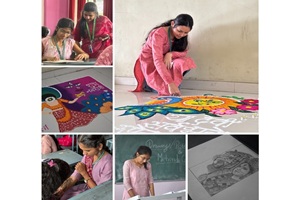
    Rangoli CompetitionMs. Pradnya Patil
    Ms. Shrutika Khobragade
    1st – Manasvi Vinod Patil
    Mehndi CompetitionMs. Pooja Patil
    Ms. Snehal Ghoparkar
    1st – Shruti Arun Tondlekar
    Reel competitionMs. Nikita Saindane
    Ms. Somya Karambali
    1st – Shreyash Bhuikot
    Best Garba step CompetitionMs.Tejashree Pangare
    Mr. Rutvij Mane
    1st – Simple Shrikant Dogra

    A total of 34 students actively participated, with an overall attendance of around 80+ including faculty and volunteers.Participants displayed exceptional creativity, designed beautiful rangolis, posters, and mehendi patterns, while others showcased their energy through garba performances.

    After the completion of all competitions, the submitted drawings, posters, rangolis, and mehendi designs were carefully evaluated by the judges based on creativity, neatness, and presentation.Their fair and thoughtful assessment helped identify the most deserving winner in each category. At around 4:15 PM, the results were announced in the presence of faculty members, judges, and students.The winners were congratulated with a bouquet and presented with online certificates for their achievement, while all participants received participation certificates as a token of appreciation.The event concluded with a group photograph of faculty, judges, winners, and volunteers, marking the successful completion of the celebration.

  • Tech Aspiria 2.0 report

    Tech Aspiria 2.0 report

    DateSeptember 30, 2025
    VenueECS Department, 1st Floor
    Faculty CoordinatorMr. Mithun Nair, Mr. Shashikant Renushe
    DepartmentElectronics and Computer Science
    Event Objective:To encourage students to demonstrate their technical skills and creativity through events such as web designing, poster designing, and quiz competitions.
    To provide a platform that enhances problem-solving ability, design thinking, and competitive participation among engineering students.
    Event Outcome:Students gained practical exposure and improved confidence in presenting technical work, designing webpages, and creating digital posters.
    The event promoted teamwork, innovation, and active participation, strengthening students’ overall technical and creative competencies.

    TechAspiria 2.0 was organized on 30 September 2025 by the IETE Student Forum of the Department of Electronics and Computer Science. The event aimed to promote technical creativity, problem-solving abilities, and competitive spirit among the students through multiple activities including Web Designing, Quiz Competition, and Poster Designing. The program was inaugurated by Dr. J. W. Bakal, Principal, who addressed the participants and highlighted the importance of technical competitions in enhancing core engineering skills. Dr. Mansi Subhedar, Head of Department, also addressed the gathering and encouraged students to utilize such platforms to build confidence and improve their technical competencies.

    TechAspiria 2.0 featured a range of competitions designed to test students’ creativity, technical knowledge, and design skills. The Web Designing Competition was judged by Dr. Rajashree Gadhve, HOD, Computer Engineering, who evaluated the entries based on design quality, responsiveness, functionality, and originality. The Poster Designing Competition was assessed by Ms. Gayatri Deshpande, Faculty from Civil Engineering, who judged the creativity, clarity, and visual presentation of the posters. The quiz and other activity rounds received strong participation, demonstrating the enthusiasm and preparedness of the students. The event was successfully executed by the IETE Student Forum, with coordination and support from the IETE Faculty In-Charges Mr. Mithun Nair and Mr. Shashikant Renushe. Their efficient planning and supervision ensured smooth conduct of all activities throughout the day.

    TechAspiria 2.0 provided students an excellent opportunity to showcase their skills, collaborate with peers, and gain valuable feedback from expert faculty members. The event concluded with appreciation for the winners and acknowledgment of the efforts of all participants, volunteers, and faculty coordinators. Overall, the event contributed significantly to fostering technical excellence and creativity within the department.

  • Hands-on Workshop on Assemble your first PC 2025-26

    Hands-on Workshop on Assemble your first PC 2025-26

    DateSeptember 29, 2025
    VenueResearch lab
    Resource PersonMr. Vijay
    Faculty CoordinatorProf. Supriya Shigwan
    DepartmentElectrical and Computer Engineering
    Event ObjectiveTo study and understand the process of assembling a personal computer and identify each component.
    Event OutcomeParticipants gained practical experience in assembling and maintaining a computer.

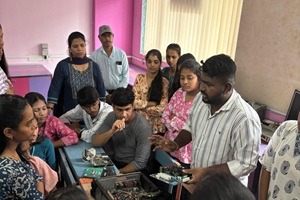
    Speaker started the session with the introduction of different components of PC. He explains types of components available in the market. He has also shown them the hardware panel and different hardware components. Around 52 Second year ECE students attended the workshop.

    The Workshop content is as follows:

    The study and application of hands-on skills in computer hardware are essential for understanding how computers operate at the physical level. These skills enable learners and technicians to assemble, maintain, troubleshoot, and repair computer systems effectively. The objective of this report is to document the practical skills gained through hands-on training in computer hardware.

    1. Identification of Hardware Components
      • Recognized and described the function of various components: motherboard, processor, RAM, hard drive, SSD, power supply, expansion cards, etc.
      • Distinguished between different ports (USB, HDMI, VGA, etc.) and connectors.
    2. Assembling a Computer
      • Installed CPU onto the motherboard with appropriate thermal paste.
      • Installed RAM, power supply, storage drives, and expansion cards.
      • Connected front panel headers, fans, and power cables correctly.
      • Mounted the motherboard and components into the computer case.
      • Ensured proper cable management and airflow.
    3. Disassembling a Computer
      • Powered down and discharged static electricity using an anti-static wrist strap.
      • Carefully removed each component while documenting the process.
      • Stored components safely to prevent damage.
    4. Troubleshooting and Diagnostics
      • Identified and replaced faulty RAM and hard drives.
      • Diagnosed POST errors using beep codes and LED indicators.
      • Used BIOS/UEFI settings to test hardware recognition.
      • Resolved boot issues and overheating problems.
    5. Software and Driver Installation
      • Installed operating systems (Windows/Linux) for testing.
      • Installed and updated hardware drivers.
      • Verified hardware functionality via Device Manager and system tools.

    The hands-on experience with computer hardware provided valuable technical knowledge and practical skills that are essential for anyone pursuing a career in IT or computer maintenance At the end of the session questions were asked by the students regarding the troubleshooting of PC that was promptly answered by the speaker.

  • Debate Competition on “Building the Transition Traditional Practices vs. Sustainable Innovations” 2025

    Debate Competition on “Building the Transition Traditional Practices vs. Sustainable Innovations” 2025

    Date25 September, 2024
    VenueC 505,PHCET, Rasayani
    Resource PersonDr. Shilpa Pankaj Kewate
    Faculty CoordinatorDr. Shilpa Pankaj Kewate
    DepartmentCivil Engineering


    Event Objective :

    To create awareness about evolving construction practices and encourage engineering students to critically evaluate traditional methods versus sustainable innovations in the context of a future zero-carbon and climate-resilient built environment.

    Event Outcome :

    Students gained insights into sustainable construction practices, understood the need for transitioning to climate-responsive design approaches, and enhanced their debating, critical thinking, and collaborative discussion skills.

    Description of the Event

    The Student Chapter Committee of the Indian Green Building Council (IGBC) at Mahatma Education Society’s Pillai HOC College of Engineering & Technology, Rasayani, organized a Debate Competition on the topic “Building the Transition: Traditional Practices vs. Sustainable Innovations” on 25 September 2024.

    The event aimed to foster constructive dialogue on the importance of sustainable practices within the construction and building industry. A total of 30 students participated in the debate. The competition encouraged young civil engineers to analyze the benefits and limitations of traditional construction techniques and compare them with modern sustainable innovations.

    Through thoughtful arguments and interactive discussions, students explored how traditional knowledge and advanced sustainable technologies can together shape a responsible and resilient built environment.