| Date | March 9th, 2026 |
| Venue | Conclave –II 3rd Floor |
| Resource Person | Dr. Jignasha Dalal |
| Faculty Coordinator | Prof. Mithun Nair |
| Department | Electronics & Computer Science |
| Event Objective | To introduce students to the concept of Agentic AI and its evolution from traditional AI systems. To provide insights into real-world applications of Agentic AI across industries such as finance, healthcare, cybersecurity, and logistics. To help students understand multi-agent collaboration and structured AI workflows. To demonstrate practical implementation of AI agents using modern tools and frameworks. |
| Event Outcome | Students gained an understanding of Agentic AI and its role in building autonomous, goal-driven systems. Students learned how multiple AI agents collaborate to solve complex problems efficiently. Students were exposed to real-world use cases, enhancing their awareness of AI applications across industries. Students developed practical insights through a live demonstration of AI agent workflows. |
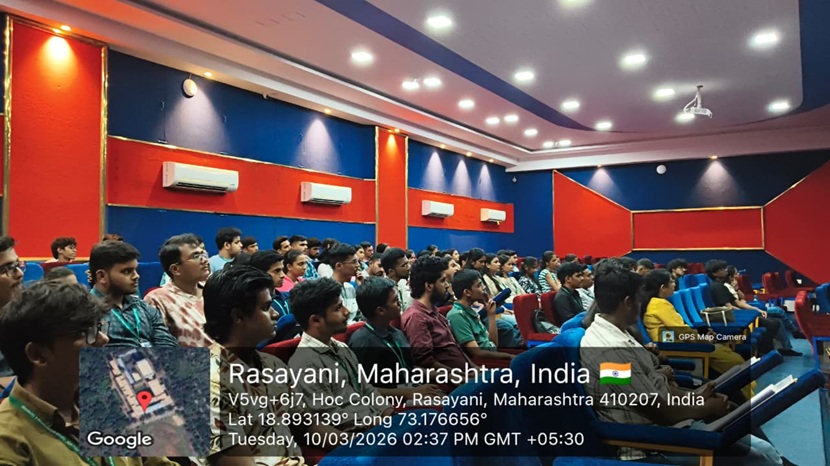
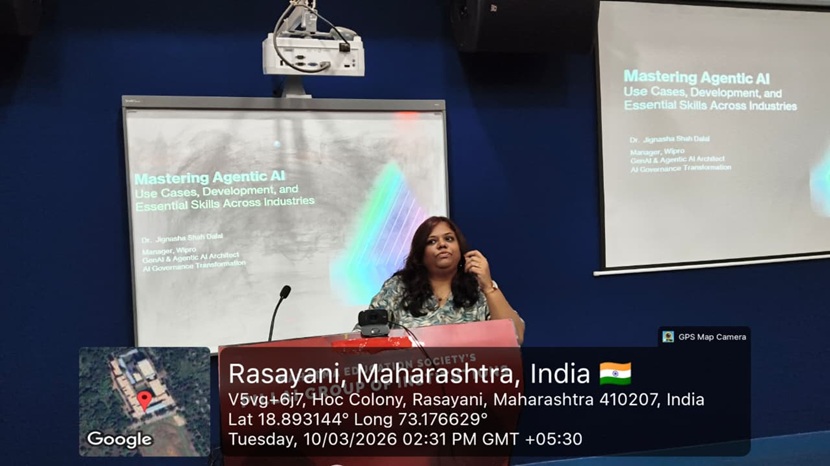
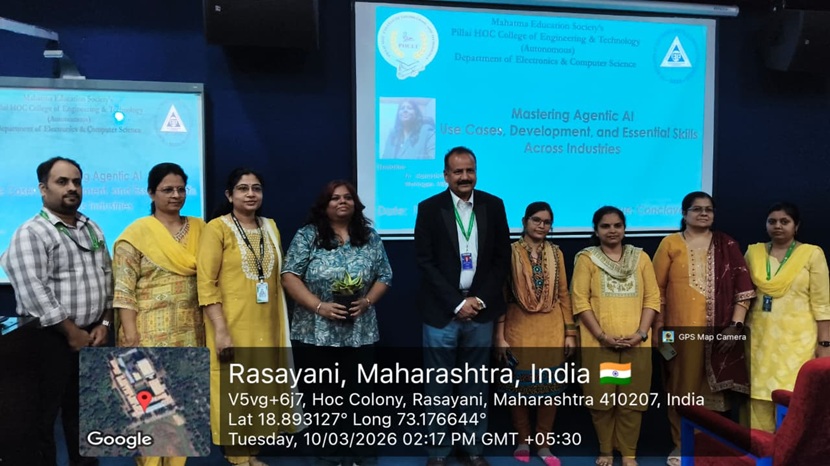
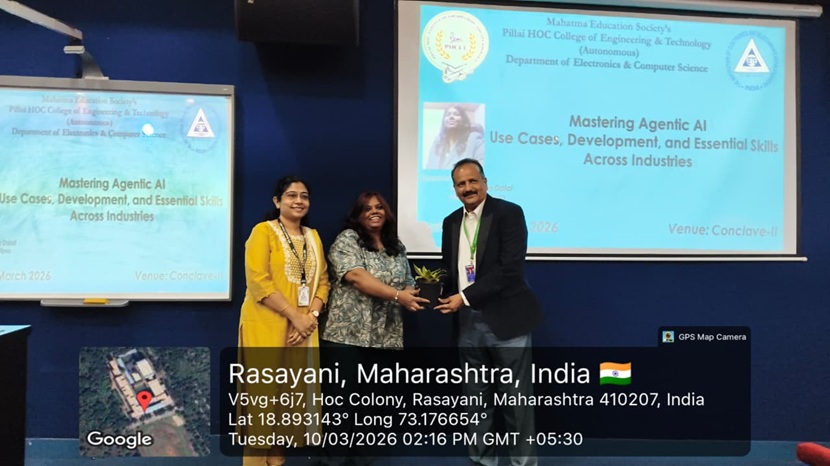
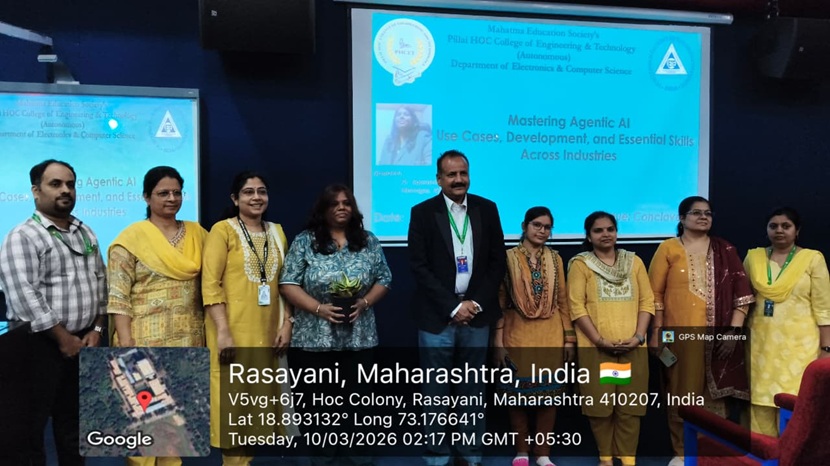
A session on “Mastering Agentic AI: Use Cases, Development, and Essential Skills Across Industries” was conducted for the students of the Department of Electronics and Computer Science on 9th March 2026. The session was delivered by Dr. Jignasha Dalal, Manager at Wipro, who introduced students to the evolving capabilities of artificial intelligence. The session began with an engaging discussion on how AI is transitioning from answering queries to planning, decision-making, and executing tasks autonomously. Students were introduced to the concept of Agentic AI and its significance in modern technological advancements.
During the session, various real-world applications of Agentic AI were discussed, covering domains such as finance, healthcare, cybersecurity, and logistics. The resource person explained how AI systems are becoming more intelligent and capable of working towards defined goals.
A key highlight of the session was the explanation of multi-agent collaboration, where multiple AI agents interact within structured workflows to solve complex problems. The session was highly interactive, with practical examples that simplified complex concepts and made them relatable for students. Participants were actively engaged and connected theoretical knowledge with real-world execution.
Overall, the session was informative and impactful. It enhanced students’ understanding of advanced AI concepts and provided them with valuable exposure to the future of autonomous intelligent systems.