| Date | 19th November 2024 |
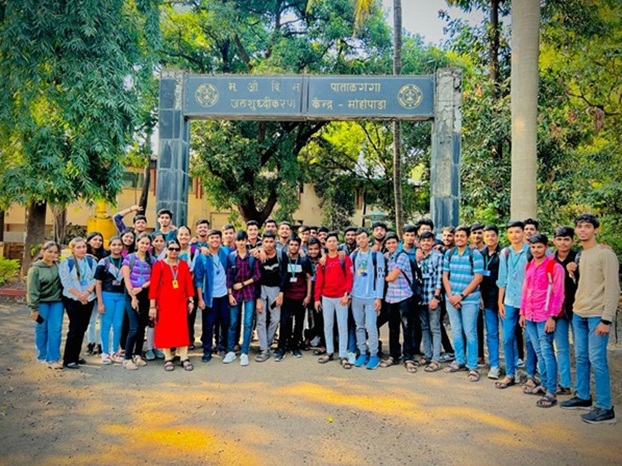
| Venue | Common Effluent Treatment Plant, Patalganga |
| Faculty Coordinator | Dr. Avinash Gatade, Dr. Sanjay Ghorpade, and Mrs. Sunita Khansole, |
| Resource Person | Plant supervisor |
| Department | Department of Applied Sciences & Humanities |
| Event Objective | To demonstrate various working of Common Effluent Treatment Plant. |
Event Outcome: ETP Plant Visit of Students
- Enhanced Understanding: Students gained practical insights into the working of an Effluent Treatment Plant, complementing their theoretical knowledge of wastewater treatment processes.
- Hands-on Exposure: They observed various stages of effluent treatment including screening, primary sedimentation, biological treatment, and sludge management, which helped in understanding real-world industrial applications.
- Environmental Awareness: The visit emphasized the importance of pollution control, water recycling, and sustainable industrial practices, fostering a sense of environmental responsibility among students.
- Technical Knowledge: Students learned about the operation of pumps, aerators, clarifiers, chemical dosing systems, and monitoring equipment used in ETPs.
- Interactive Learning: Opportunity to interact with plant engineers and ask questions clarified doubts regarding process efficiency, regulatory standards, and challenges in effluent management.
- Skill Development: Students improved observational and analytical skills by noting process parameters and operational methods used in industrial effluent treatment.
- Inspiration for Future Careers: Exposure to the industrial setup motivated students to consider environmental engineering, process engineering, or related fields as potential career paths.
Contents:
What is Water Waste
Water waste, or wastewater, is water that has been used and contaminated by human activities.
Sources include households, industries, hospitals, agriculture, and commercial establishments.
Contains pollutants like chemicals, detergents, pathogens, heavy metals, and organic matter.
Sources of Water Waste
Domestic / Household: Bathing, washing, kitchen effluents, sewage.
Industrial: Manufacturing, textile, chemical, and food processing effluents.
Agricultural Runoff: Pesticides, fertilizers, and animal waste entering water bodies.
Hospitals & Laboratories: Contaminated water from labs, diagnostics, and pharmaceutical disposal.
Commercial Establishments: Hotels, restaurants, malls, and offices producing greywater.
Effects of Water Waste on the Environment
Water Pollution: Contaminated water harms rivers, lakes, and groundwater.
Soil Pollution: Pollutants affect soil fertility and quality.
Health Hazards: Spread of waterborne diseases like cholera, typhoid, and dysentery.
Ecosystem Damage: Aquatic life suffers due to toxins, oxygen depletion, and eutrophication.
Economic Impact: Costs increase for water treatment and loss of usable water resources.
Waste Management Rules, 2016 (India)
Effluent Treatment: Industries must treat wastewater before discharge.
Segregation: Domestic and industrial wastewater should not mix with stormwater.
Reuse & Recycling: Promote reuse of treated water in agriculture, industry, or cooling.
Compliance & Reporting: Regular monitoring, record-keeping, and reporting to authorities.
Authorization: Only approved treatment plants can handle industrial wastewater.
Roles and Responsibilities of Stakeholders
- Industries / Producers:
Treat effluents before discharge
implement water recycling and zero-liquid discharge practices
maintain records of wastewater treatment and disposal. - Households / Consumers:
Avoid discharging chemicals, oils, or non-biodegradable waste into drains
use water efficiently to reduce wastewater generation. - Wastewater Collectors / Treatment Plants:
Ensure proper collection, treatment, and disposal of wastewater
comply with environmental standards and maintain logs. - Government / Regulatory Bodies:
Implement Water (Prevention and Control of Pollution) Act and related rules
monitor compliance and enforce penalties for violations
promote awareness campaigns for water conservation and proper wastewater disposal. - NGOs / Community Groups:
Educate citizens about wastewater treatment and conservation
promote rainwater harvesting, recycling, and eco-friendly practices.