

Master of Technology in Computer Engineering
| Affiliated to | Duration | Academic Year | Sanctioned Intake | Exam Structure |
|---|---|---|---|---|
| Mumbai University | 2 years, Full Time | 2 semesters each | 12 | Theory, Practical, Oral, Term Work |
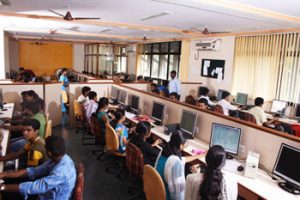
Computer Engineering provides the opportunity to work in the continuously changing technology sector. With the development of faster hardware components, new communication systems and software there is a demand for computer Engineers. Computer Engineering students study the design of digital hardware and software systems. Computer Engineering encompasses a wide range of topics including operating systems, computer architecture, computer networks, robotics, artificial intelligence and computer-aided design. An important area within computing engineering is the development of embedded system devices such as cell phones, digital audio players, digital video recorders, alarm systems, x-ray machines and laser surgical tools, all require integration of hardware and embedded software and are all the result of computer engineering.
Software engineering companies, telecommunications firms, designers of digital hardware and many other business enterprises hire Computer Engineers right out of college and pay them well.
Vision
To produce technically competent, innovative, self-motivated computer engineers, through the teaching – learning process and research with globally accepted standards, who shall be responsible towards society and the environment.
Mission
To develop graduates with competence, conscience and compassion who are prepared to excel in the field of computer engineering. To create an environment of excellence in both theoretical and practical aspects of computing. To encourage and strengthen innovative thinking and problem solving capability with emphasis on research and development with respect for the environment.
POs, PEOs and PSOs
Program Outcomes (POs)
Engineering Graduates will be able to:
- PO1: Engineering Knowledge: Apply knowledge of mathematics, natural science, computing, engineering fundamentals and an engineering specialization to develop to the solution of complex engineering problems.
- PO2: Problem Analysis: Identify, formulate, review research literature and analyze complex engineering problems reaching substantiated conclusions with consideration for sustainable development.
- PO3: Design/Development of Solutions: Design creative solutions for complex engineering problems and design/develop systems/components/processes to meet identified needs with consideration for the public health and safety, whole-life cost, net zero carbon, culture, society and environment as required.
- PO4: Conduct Investigations of Complex Problems: Conduct investigations of complex engineering problems using research-based knowledge including design of experiments, modelling, analysis & interpretation of data to provide valid conclusions.
- PO5: Engineering Tool Usage: Create, select and apply appropriate techniques, resources and modern engineering & IT tools, including prediction and modelling recognizing their limitations to solve complex engineering problems.
- PO6: The Engineer and The World: Analyze and evaluate societal and environmental aspects while solving complex engineering problems for its impact on sustainability with reference to economy, health, safety, legal framework, culture and environment.
- PO7: Ethics: Apply ethical principles and commit to professional ethics, human values, diversity and inclusion; adhere to national & international laws.
- PO8: Individual and Collaborative Team work: Function effectively as an individual, and as a member or leader in diverse/multi-disciplinary teams.
- PO9: Communication: Communicate effectively and inclusively within the engineering community and society at large, such as being able to comprehend and write effective reports and design documentation, make effective presentations considering cultural, language, and learning differences
- PO10: Project Management and Finance: Apply knowledge and understanding of engineering management principles and economic decision-making and apply these to one’s own work, as a member and leader in a team, and to manage projects and in multidisciplinary environments.
- PO11: Life-Long Learning: Recognize the need for, and have the preparation and ability for i) independent and life-long learning ii) adaptability to new and emerging technologies and iii) critical thinking in the broadest context of technological change.
Program Educational Objectives (PEOs)
- To enable the graduates to develop expertise in their chosen field with logical and analytical skills having exposure to different programming paradigms, environments and platforms.
- To help graduates acquire technical knowledge and skills in the core areas of computing viz., algorithmic, data structures, database management, networking, etc. and develop the ability to apply them to solve real life problems.
- To facilitate the graduates to assimilate knowledge and skills in multidisciplinary environments through projects and industrial training, thus providing a sustainable competitive edge in R&D as well as meeting industry needs.
- To create academic ambience, skilful communication, leadership quality, self-motivation and ethical values that would enable one for a successful career in national and international organizations.
- To contribute to the development of the next generation of computing by designing solutions to complex engineering problems using emerging tools and technologies.
Program Specific Outcomes (PSOs)
A graduate in Computer Engineering is expected to
- Apply knowledge of mathematical foundations, algorithmic principles and computer science in modelling and design of computer based systems.
- Gather requirements, design and implement software projects using modern tools.
- Solve real time problems by providing automated solutions in diverse fields of human endeavour.
- Optimize the use of resources in problem solving and work as a team player.
Master of Engineering in Computer Engineering
| Affiliated to | Duration | Academic Year | Sanctioned Intake | Exam Structure |
|---|---|---|---|---|
| Mumbai University | 2 years, Full Time | 2 semesters each | 12 | Theory, Practical, Oral, Term Work |