Program Overview

Bachelor of Technology in Electrical and Computer Engineering

Affiliated to Duration Academic Year Sanctioned Intake Exam Structure Theory Exam
Mumbai University
4 years, Full Time
2 semesters each
60Theory, Practical, Oral, Term Work
Conducted by University of Mumbai

B.Tech in Electrical and Computer Engineering equips students with strong skills in electrical systems and modern computing technologies. The program blends core concepts like power systems, digital electronics, embedded systems, and control engineering with programming, networking, and data analytics. The curriculum emphasizes emerging technologies such as AI, machine learning, IoT, and automation for intelligent power management. Applications of computing in electrical engineering include smart grid monitoring, predictive maintenance, load forecasting, renewable energy integration, and real-time control using data analytics. Cybersecurity concepts are incorporated to protect smart meters, grid communication, and digital infrastructure. Overall, the program equips graduates to become future-ready professionals capable of building secure, efficient, and intelligent electrical systems.

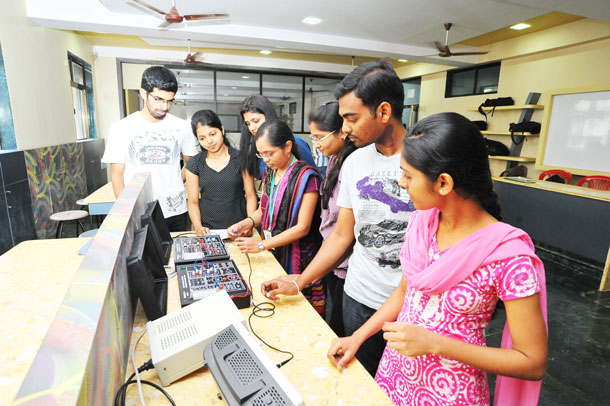
Electrical-Engg-Students

Vision

To be a leading Electrical and Computer Engineering department, cultivating diverse learners into globally competent professionals for the betterment of society.

Mission

  • To foster continuous learning and research in emerging areas of Electrical and Computer Engineering, providing students with a strong technical foundation.
  • To cultivate curiosity, professionalism, teamwork, and innovation among students, fostering an environment that encourages entrepreneurial thinking and collaborative problem-solving.
  • To enhance knowledge sharing and collaboration with industry, academic, and research partners, addressing global challenges and contributing to impactful technological advancements.

POs, PEOs and PSOs

Program Outcomes (POs)
Engineering Graduates will be able to:

  • PO1: Engineering Knowledge: Apply knowledge of mathematics, natural science, computing, engineering fundamentals and an engineering specialization to develop to the solution of complex engineering problems.
  • PO2: Problem Analysis: Identify, formulate, review research literature and analyze complex engineering problems reaching substantiated conclusions with consideration for sustainable development.
  • PO3: Design/Development of Solutions: Design creative solutions for complex engineering problems and design/develop systems/components/processes to meet identified needs with consideration for the public health and safety, whole-life cost, net zero carbon, culture, society and environment as required.
  • PO4: Conduct Investigations of Complex Problems: Conduct investigations of complex engineering problems using research-based knowledge including design of experiments, modelling, analysis & interpretation of data to provide valid conclusions.
  • PO5: Engineering Tool Usage: Create, select and apply appropriate techniques, resources and modern engineering & IT tools, including prediction and modelling recognizing their limitations to solve complex engineering problems.
  • PO6: The Engineer and The World: Analyze and evaluate societal and environmental aspects while solving complex engineering problems for its impact on sustainability with reference to economy, health, safety, legal framework, culture and environment.
  • PO7: Ethics: Apply ethical principles and commit to professional ethics, human values, diversity and inclusion; adhere to national & international laws.
  • PO8: Individual and Collaborative Team work: Function effectively as an individual, and as a member or leader in diverse/multi-disciplinary teams.
  • PO9: Communication: Communicate effectively and inclusively within the engineering community and society at large, such as being able to comprehend and write effective reports and design documentation, make effective presentations considering cultural, language, and learning differences
  • PO10: Project Management and Finance: Apply knowledge and understanding of engineering management principles and economic decision-making and apply these to one’s own work, as a member and leader in a team, and to manage projects and in multidisciplinary environments.
  • PO11: Life-Long Learning: Recognize the need for, and have the preparation and ability for i) independent and life-long learning ii) adaptability to new and emerging technologies and iii) critical thinking in the broadest context of technological change.

Program Educational Objectives (PEOs)

  1. Achieve personal and professional success while upholding ethical standards and demonstrating social responsibility in engineering practice.
  2. Maintain and enhance technical competence through lifelong learning, preparing for advanced degrees in engineering and science.
  3. Design systems, components, or processes meeting practical constraints like economic, environmental, and social considerations.
  4. Utilize modern engineering tools, techniques, and software to solve complex problems and enhance engineering practices.
  5. Stay updated with technological advancements, contributing to engineering knowledge through research and innovation.

Program Specific Outcomes (PSOs)

A graduate in Electrical and Computer Engineering shall be able to

  1. Stay updated with technological advancements in the field of Electrical and Computer Engineering.
  2. Demonstrate the capability to contribute effectively as a team member in collaborative, multidisciplinary engineering projects within the electrical and computer domains.
  3. Apply technical skills and competencies to design, analyze, and optimize complex Electrical and Computer Engineering systems.
  4. Proficiently utilize both software and hardware tools to develop and implement technical solutions for challenging problems in Electrical and Computer Engineering.

Bachelor of Engineering in Electrical and Computer Engineering

Affiliated to Duration Academic Year Sanctioned Intake Exam Structure Theory Exam
Mumbai University
4 years, Full Time
2 semesters each
60Theory, Practical, Oral, Term Work
Conducted by University of Mumbai

Course Outcomes

View Course Outcomes