Date and Time
Venue
Target Audience
Speaker Profile
Department
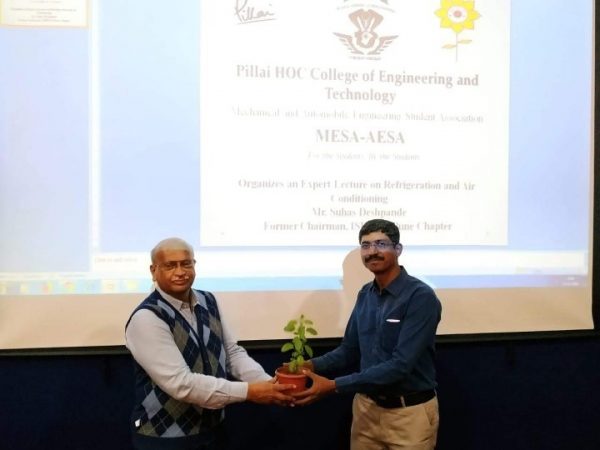
13th February, 2019 at 11:00 a.m.
Conclave 1
Mechanical Engineering Students
Mr. Suhas Deshpande
https://in.linkedin.com/in/suhas-deshpande-08b563b1
Mechanical Engineering


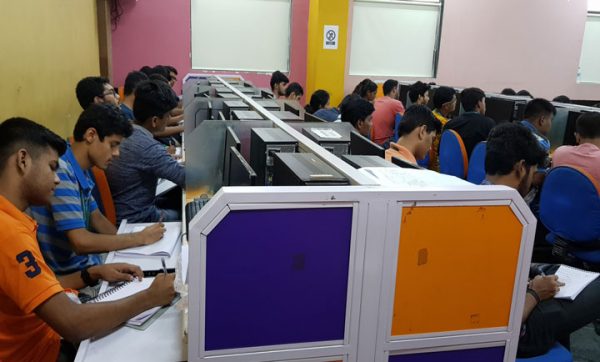
Pillai HOC College of Engineering and Technology, Rasayani organized Four Days Training Program on Cisco Certified Network Associate under MOU between Telenetworks Pvt. Ltd. and PHCET Ms. Mansi Subhedar is convener for this event every year. Mr. Abhijeet More, Ms. Rupali Sathe, Ms. Supriya S. Shigwan coordinated this event successfully. 80 students altogether from Computer, EXTC, IT and Electrical Engineering departments participated in this workshop. Yogesh Hudale – ‎Founder and Chief Mentor at TeleNetworks Technologies, trained students for four days.
CCNA is an internationally recognized qualification that provides the students with the opportunity to enter employment in the computer networking field. The syllabus of this workshop covers blue print of CISCO.
The guest speaker took over the session with introductory focus on basics of CCNA. The trainer then started the practical sessions and taught students how to design their own networks, how to connect various devices and showed the demonstrations of real time routers and switches. With the help of videos and visuals, the students learned the basics of routing.
The students were then taught about the area networks and their network fundamentals, how networking works in Industries, how to configure Real-time Routers, Switches and other Networking equipments etc. Information about Cisco Certifications and their importance, Roles and Responsibilities of Network engineers in Companies, Types of Routers, Switches, Firewalls and their usage in the industries etc. was also discussed.

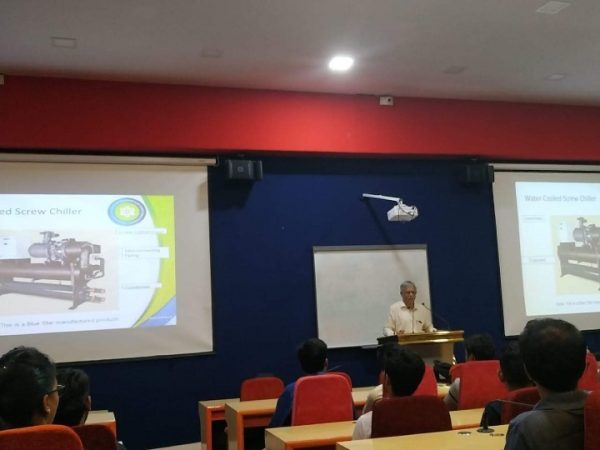
Abstract of Talk: HVAC Industry
Heating, ventilation, and air conditioning (HVAC) is the technology of indoor and vehicular environmental comfort. Its goal is to provide thermal comfort and acceptable indoor air quality. HVAC system design is a subdiscipline of mechanical engineering, based on the principles of thermodynamics, fluid mechanics and heat transfer. “Refrigeration” is sometimes added to the field’s abbreviation, as HVAC&R or HVACR or “ventilation” is dropped, as in HACR (as in the designation of HACR-rated circuit breakers).
HVAC is an important part of residential structures such as single family homes, apartment buildings, hotels and senior living facilities, medium to large industrial and office buildings such as skyscrapers and hospitals, vehicles such as cars, trains, airplanes, ships and submarines, and in marine environments, where safe and healthy building conditions are regulated with respect to temperature and humidity, using fresh air from outdoors.
Ventilating or ventilation (the V in HVAC) is the process of exchanging or replacing air in any space to provide high indoor air quality which involves temperature control, oxygen replenishment, and removal of moisture, odors, smoke, heat, dust, airborne bacteria, carbon dioxide, and other gases. Ventilation removes unpleasant smells and excessive moisture, introduces outside air, keeps interior building air circulating, and prevents stagnation of the interior air.
Ventilation includes both the exchange of air to the outside as well as circulation of air within the building. It is one of the most important factors for maintaining acceptable indoor air quality in buildings. Methods for ventilating a building may be divided into mechanical/forced and natural types.
Current Scenario of HVAC Industry:
HVAC plays an important role in the design of medium to large industrial and office buildings such as skyscrapers, onboard vessels, and in marine environments such as aquariums, where safe and healthy building conditions are regulated with respect to temperature and humidity, using fresh air from outdoors. HVAC systems have become the required industry standard for construction of new buildings.
Now days most modern buildings use energy-efficient HVAC systems, as a result of rapid growth in the construction and real estate markets worldwide which has a positive influence on the market. Urbanisation and industrialisation have been on the rise in developing countries. There is an increased demand in the HVAC systems due to new constructions in the residential, commercial, and industrial sectors.
Monitoring systems help in tracking the energy consumption of a building while intelligent technology controls the energy output of an HVAC system. For instance, fans used in the heating system of computing systems are switched on only after the computing system reaches the set temperature, making the system energy efficient.
The key growth areas of the HVAC market are the growing population and industrialisation, rising sales of domestic and commercial buildings, increasing construction expenditure, and the expanding purchasing power of the middle class.
The non-residential users of HVAC systems are healthcare and educational institutions, manufacturing and industrial buildings, as well as offices and retail stores. Driving the growth of HVAC systems are the increase in construction activities rapid industrialisation, as well as the need for enhancing energy efficiency in buildings. The major players in the global HVAC market are Carrier, Daikin Industries, Ingersoll-Rand, Johnson Controls, and LG. The other prominent companies in the market are AB Electrolux, Bosch Thermotechnik, Fujitsu, GD Midea, Gree Electric Appliances, Haier, Hitachi, Lennox International, Nortek, Paloma Industries, Samsung, Siemens and Vaillant Group.